
If you see blood on your toothbrush during pregnancy, book a dental check if the bleeding repeats. Hormonal changes can make gums react more strongly to plaque. A dentist can tell whether the inflammation is limited to the gums or whether there are other findings that need treatment.
Why gums can bleed more in pregnancy
Plaque collects where the teeth and gums meet. During pregnancy, the gums may become more swollen, tender or prone to bleeding in response to it. This is often called pregnancy gingivitis. Bleeding may also come from an existing gum problem, a local irritation or a raised area that bleeds easily. A dentist should examine a lump or a single spot that keeps bleeding.
If morning sickness makes brushing difficult, try a small soft brush and pick a time when nausea is easier to manage. After vomiting, rinse with water and avoid brushing immediately while the teeth are exposed to acid. Tell your dentist if vomiting is frequent so they can advise on protecting the enamel.
What happens at the dental visit
Tell the team how far along you are, what medicines you take and whether your maternity team has flagged special concerns. The dentist will look for plaque, tartar, redness and swelling. They may check gum pockets or order an X-ray if needed to assess suspected disease. Preventive and necessary dental care can generally be provided throughout pregnancy. The dentist can coordinate with your maternity team when there are individual concerns.
The findings guide treatment. Some people need a professional cleaning and help adapting their routine. Others need more detailed gum assessment or treatment below the gumline. Pregnancy-related inflammation can improve, but persistent bleeding after delivery still deserves a check.
What to do at home
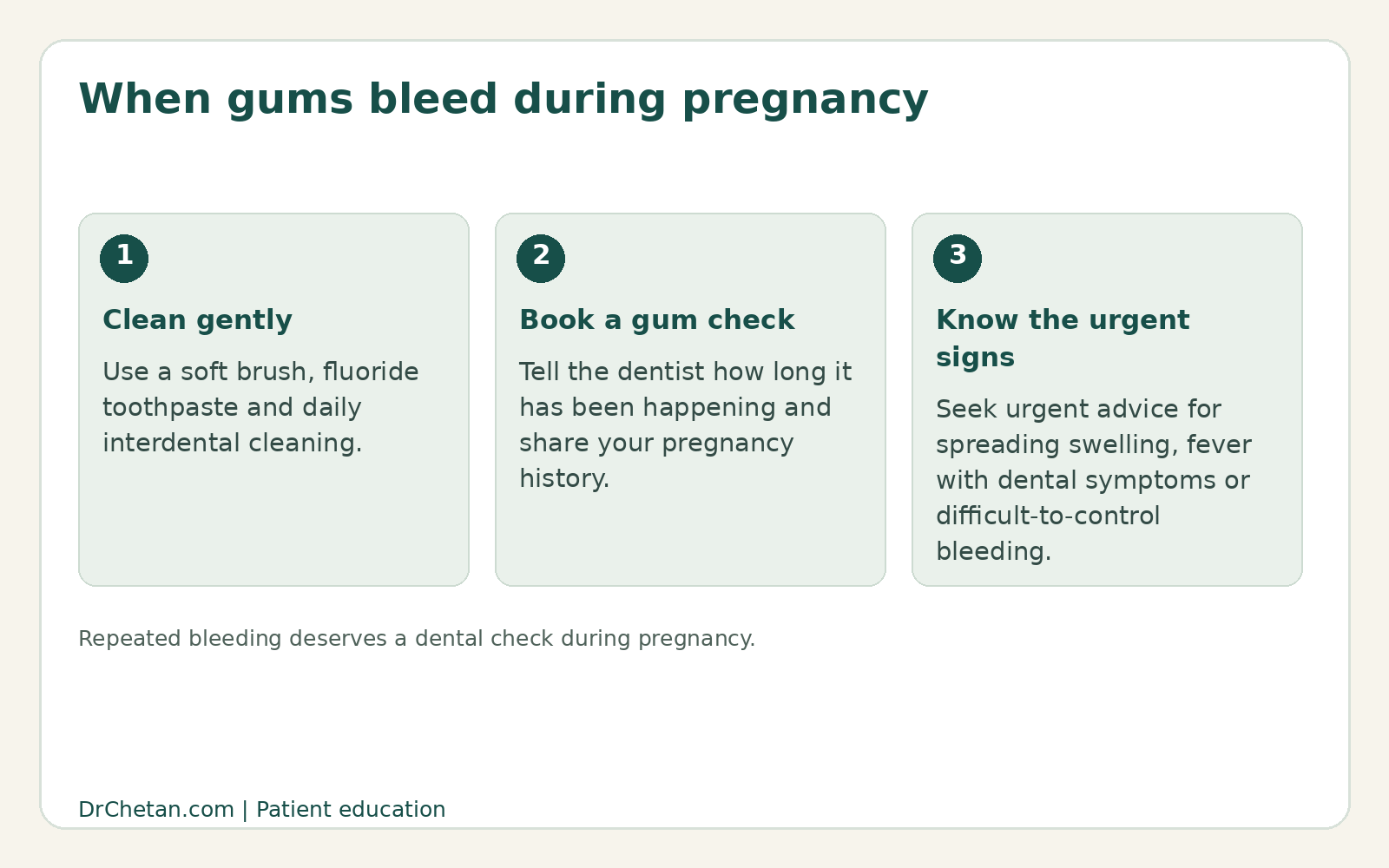
Brush twice daily with fluoride toothpaste and a soft brush. Use gentle pressure at the gumline and clean between teeth daily with floss or a properly sized interdental brush. If you are unsure which tool to use, ask the dentist to demonstrate. Ongoing bleeding is a reason to get advice about the area and your technique.
When to seek help sooner
Call the dentist promptly for a lump that keeps bleeding, a loose tooth, persistent pain or pus. Get urgent dental advice for facial swelling, fever with dental symptoms or bleeding that is difficult to control. Difficulty breathing or swallowing with mouth or facial swelling needs emergency medical care. If you also notice unexplained bruising or bleeding elsewhere, contact your medical team.
Frequently asked questions
Can I have a professional cleaning while pregnant?
Yes, routine preventive care and clinically needed gum treatment can generally be provided during pregnancy. Share your health history so the team can tailor your care.
Should I skip brushing if I see blood?
Keep the area clean using a soft brush and gentle pressure. Arrange a check if it keeps bleeding.
Will it go away after delivery?
Hormone-related swelling may ease. Have any ongoing bleeding checked, particularly if you also notice recession or a loose tooth.
Related guide: Dental care during pregnancy.
References and further reading
- American Dental Association: oral health and dental care in pregnancy
- JADA: keeping a healthy smile during pregnancy
Sources checked 3 November 2026. General patient education. Discuss your individual care with your clinical team. Featured image is an AI-created illustration.

Leave a Reply