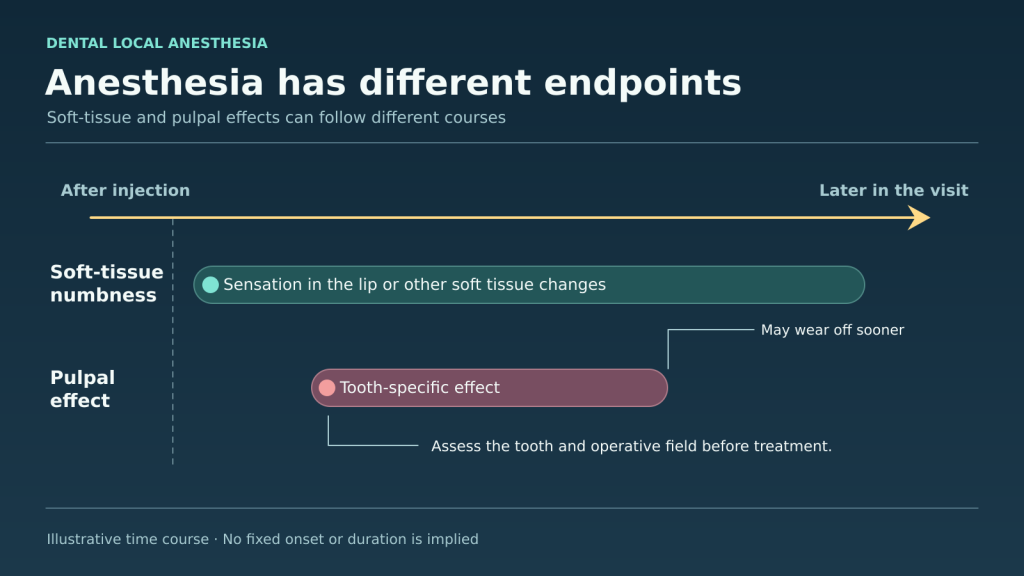
Onset is the time until the required effect is present. Depth is the adequacy of the effect for the intended stimulus. Duration is how long that effect remains adequate. Each term needs a named endpoint. A numb lip, a nonresponsive pulp test and an adequately anesthetized surgical field describe different observations. [1, 2]
Onset depends on the path from depot to nerve
After deposition, drug must reach the intended fibers. Distance from the target, diffusion through tissue, bone and nerve coverings, local perfusion, concentration and ionization all influence this process. A block can take longer to produce its intended effect than a local infiltration in some contexts. Agent comparisons are meaningful only when the technique, tissue and definition of success are specified. [3, 4]
The time when a patient first notices tingling is a useful observation. It is not necessarily when the operative field becomes adequately anesthetized. Use the timing expected for the selected technique and product, then reassess the tooth or tissue you intend to treat. Avoid promising a fixed onset across agents or patients.
Depth is a clinical question
A sensory change can be partial. Some stimuli may still be perceived, and related territories can respond differently. Soft-tissue testing establishes the response of the tested site. Pulp sensibility tests can add information about the intended tooth. Neither guarantees the absence of pain when clinical stimulation changes. Ask the patient to signal discomfort and take the report seriously. [1]
| Observation | Useful interpretation | Next check |
|---|---|---|
| Lip feels numb | Sensation has changed in a lower-lip territory | Check the intended tooth and working soft tissue separately. |
| Tooth no longer responds to a baseline-positive sensibility test | The tested response has been reduced under those conditions | Interpret alongside diagnosis and procedural feedback. |
| Gingiva is numb but palatal manipulation hurts | The soft-tissue effect may be incomplete or outside the tested area | Stop and reassess the actual operative field and planned technique. |
Why pulpal and soft-tissue duration differ
Duration depends partly on how long the drug stays at an effective concentration near relevant fibers. Vascular uptake can remove drug from the area. A vasoconstrictor can alter local perfusion and prolong some effects. Drug properties such as protein binding can influence duration, but comparisons also depend on formulation, dose, tissue and route. Clinical studies use different endpoints, so their reported durations cannot always be combined directly. [3, 4]
Soft-tissue sensation can remain altered after the pulpal effect is no longer sufficient for treatment. This difference matters during a long appointment and in aftercare. Reassess if treatment extends or the patient reports a change. Give age-appropriate instructions about avoiding injury to numb tissues and explain when to contact the practice if symptoms are unexpected or persistent. [2]
Differential blockade without a fixed sequence
Fibers differ in diameter, myelination, firing patterns and exposure to the drug. These differences can influence sensitivity to blockade. Clinical sensory patterns also reflect which branches the injection reaches. Avoid assigning a fixed sequence of sensation loss to all formulations or assuming that a superficial response proves a deeper one. Use tissue-specific assessment instead. [3, 1]
When the response is inadequate
First confirm the intended tissue, the time since administration and the observed sensory changes. Review the agent, actual delivered volume and cumulative exposure before considering more drug. If the plan remains inadequate, decide with a supervisor whether an alternative technique, postponement or referral is appropriate. A local anesthetic decision should respond to the reason the first plan fell short.
Summary
Onset, depth and duration are meaningful only when tied to the tissue and the planned intervention. Check the field before starting and continue to reassess it during care.

Leave a Reply