Dry mouth, burning and gum discomfort can occur around perimenopause or after menopause. Tell your dentist about the timing and any new medicines or health changes. Several treatable conditions can feel similar, and a careful examination helps decide what to do first. [1–3]
Dry mouth and the changes you might notice
You may wake with a sticky mouth, need a drink to swallow dry food or find that talking for a long time becomes uncomfortable. Some people notice changes in taste or more irritation under a denture. Dry mouth is a symptom people feel. A dentist may also find reduced saliva, although the two do not always occur together. [2,3]
Saliva helps wash away food, buffer acids and protect the tissues. If saliva flow is low, new decay can occur around the gumline and on exposed roots, even in someone who had few cavities before. Dryness can also make denture wear uncomfortable and increase the likelihood of oral thrush in some patients. [1–3]
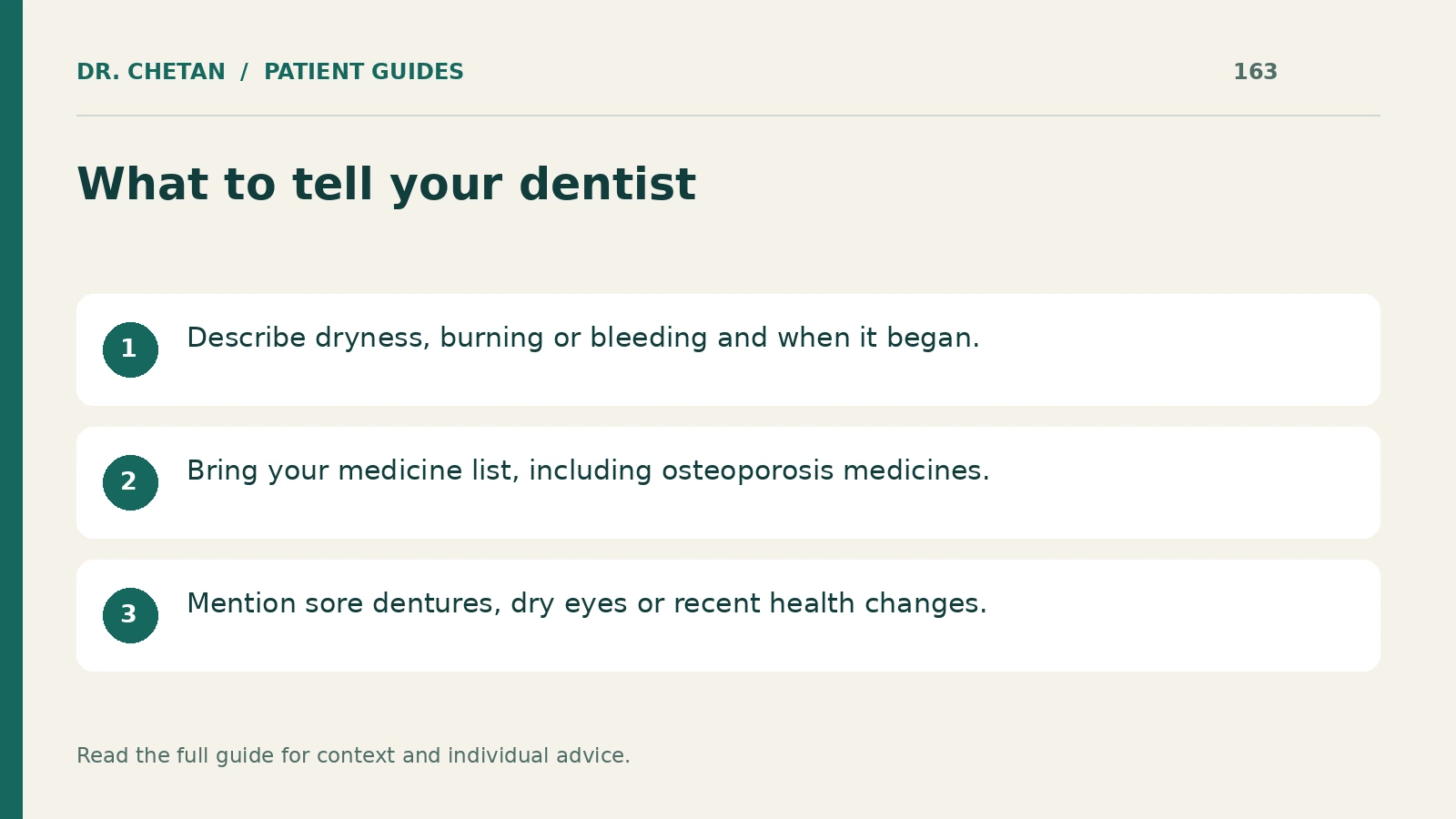
Menopause may be part of the picture. Medicines, diabetes, Sjögren disease, dehydration, mouth breathing and previous head and neck cancer treatment can also contribute. Tell the dentist if you have dry eyes, a new medicine or a dose change. Bring your prescription and non-prescription medicine list.
Burning without an obvious sore
Burning can affect the tongue, lips, palate or a larger area of the mouth. Some people notice altered taste or a dry feeling at the same time. A dentist or oral medicine specialist checks for local problems such as irritation, thrush or dry mouth, and may consider medical causes based on your history. Blood tests, saliva assessment or other investigations may be appropriate for some patients. [3]
Primary burning mouth syndrome is considered when other explanations have been assessed. If something is found, such as an ill-fitting denture or a treatable infection, the plan focuses on that cause. Burning may need review even when you cannot see a mark. A visible ulcer, lump or patch has its own assessment pathway.
Bleeding gums deserve their own check
Bleeding when you brush or clean between teeth often points to gum inflammation. It is worth arranging a check if it keeps happening. The dental team may measure the gum pockets, check for plaque and tartar, and take X-rays where needed to look for bone loss around teeth. A loose tooth, pus or a change in your bite should be mentioned when booking.
If you have osteoporosis, tell your dentist whether you take a medicine such as a bisphosphonate or denosumab, how it is given and when you last received it. This can affect planning for an extraction or other surgery. Your dentist and prescriber can decide if coordination is needed. Keep taking it according to your prescriber’s instructions unless that team advises a change. [4]
What can help between visits?
- Brush twice a day with fluoride toothpaste and use a suitable interdental cleaner. Ask your dentist whether your cavity risk calls for additional fluoride.
- If your medical team allows, sip water as needed. If you have a fluid restriction, ask about a saliva substitute or gel and follow the fluid plan you were given.
- Sugar-free gum may stimulate saliva if you can chew it comfortably. Ask about alternatives if your jaw is sore, your denture is unstable or swallowing is difficult.
- Avoid repeatedly sucking sweets or sipping sugary or acidic drinks for moisture. Consider a bland, alcohol-free mouth product if other products sting.
- Bring sore or loose dentures to the appointment so the dentist can check the fit and the tissues underneath. [1,2]
Note whether symptoms are worst after waking, while speaking or later in the day. Keeping a brief record can help when several medicines or changes started around the same time.
When to arrange care
Book a dental assessment for dryness, burning or bleeding that persists or interferes with eating, sleep or cleaning. Report a mouth ulcer that has not healed after three weeks, a persistent red or white patch, or a lump. Ask for earlier advice if a change is growing, bleeding or painful. Sudden tongue or throat swelling or difficulty breathing is a medical emergency. [5]
Frequently asked questions
Will hormone therapy fix the symptoms?
Discuss hormone therapy with the clinician managing menopause. The choice depends on your broader symptoms and health history. An oral examination can identify issues such as gum inflammation or decay that need dental care regardless of hormone treatment.
Should I stop a medicine that seems to dry my mouth?
Ask the prescriber and dentist to review the timing, the dose and possible alternatives. Keep taking prescribed medicine as directed while you seek advice.
Do I need more frequent dental appointments?
Your dentist may suggest a shorter interval if there is active decay, gum disease or low saliva flow. Ask what the next review is intended to check and what home changes to try in the meantime.
References and further reading
- NSW Health on menopause and oral health
- Healthdirect on dry mouth
- NIDCR on burning mouth syndrome
- ADA MouthHealthy on osteoporosis and oral health
- NHS guidance on symptoms of mouth cancer
Sources checked 3 November 2026. This guide provides general information. Your dental or medical team can advise on your individual needs.

Leave a Reply