
If you have rheumatoid arthritis or lupus, tell your dentist how the condition affects you today and bring your current medicine list. Joint stiffness, dry mouth, mouth ulcers and medicines that affect the immune system can each change what the dental team checks or how it plans treatment.
What to tell the practice before your visit
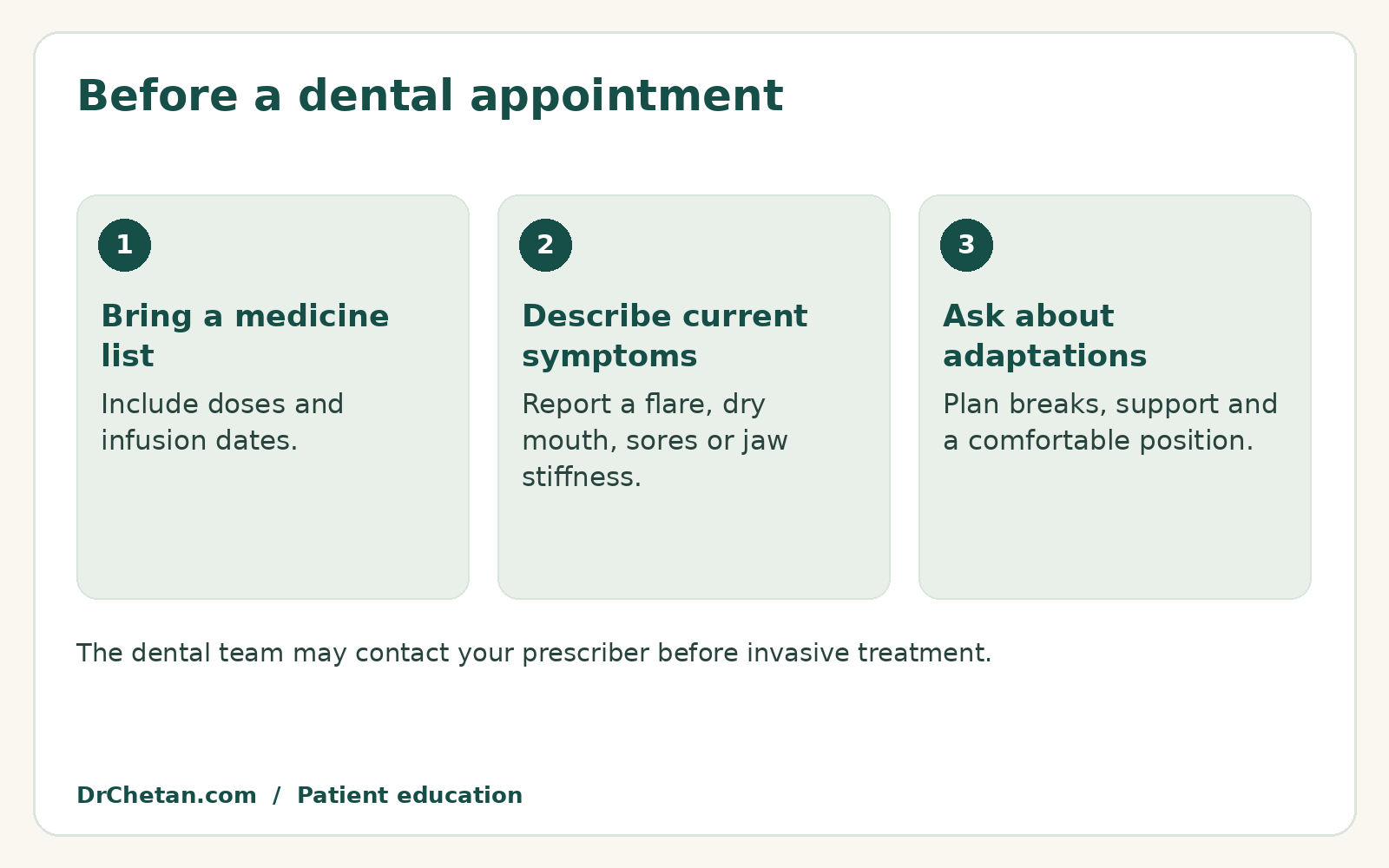
Give the diagnosis, recent flares or infections, current medicines and allergies, and the name of your treating clinician. Include methotrexate, biologic or other immune-modifying medicines, steroids, blood thinners, anti-inflammatory medicines and any osteoporosis treatment. Mention kidney disease, unusual bleeding, previous low blood counts or trouble opening your mouth. For injections or infusions, the date of your last and next dose can help the team coordinate.
Tell the receptionist if you need help transferring to the chair or if your neck or jaw has limited movement. A shorter appointment, breaks or an adjusted chair position may be easier to tolerate. Ask the clinic what it can arrange before you travel.
Dry mouth, sores and painful joints
Persistent dry mouth increases the chance of tooth decay and may occur alongside autoimmune disease, Sjögren disease or as a medicine effect. Tell your dentist if you sip water to swallow dry foods, wake with a dry mouth or have new cavities. Sip water if your medical team allows it. Ask about saliva substitutes and a fluoride prevention plan if symptoms persist.
Report recurring or persistent mouth sores, especially when they change or appeared after a medicine adjustment. Lupus can cause mouth ulcers, and sores have other causes as well. New sores with fever, a sore throat or feeling unwell while taking immune-modifying treatment need prompt medical advice. If you develop fever or signs of infection while taking methotrexate, American College of Rheumatology safety guidance advises stopping it and contacting your doctor immediately. Ask the prescribing team when it is safe to resume.
How the dentist may plan treatment
The dental team considers how well the disease is controlled, whether there is infection, what procedure is needed and which medicines could affect bleeding, infection or healing. If you need an extraction or other invasive treatment and there are recent flares, low blood counts, organ complications or significant immunosuppression, the dentist may ask your treating clinician for information or recent test results.
Keep taking prescribed medicine as directed unless the prescriber and dental team advise a change. A diagnosis of arthritis or lupus alone does not automatically call for preventive antibiotics. A suspected infection, increasing swelling or fever needs prompt assessment, especially if your immune system is suppressed. Trouble breathing or swallowing requires emergency medical care.
Make home care easier on sore days
A powered brush or a wider handle can make gripping easier. Choose an interdental aid with a handle you can hold comfortably and ask the dental team to show you where it fits. If jaw stiffness makes brushing difficult, a smaller brush head and breaks may help. Use a routine that you can keep up during a flare as well as on a good day.
Frequently asked questions
Should I skip methotrexate before an extraction?
Ask your dentist and prescriber to agree on a plan if a change is being considered. The procedure, disease control and current treatment all matter.
Can jaw pain be related to rheumatoid arthritis?
The jaw joint can be affected. Dental causes and other jaw conditions can produce similar symptoms, so an assessment is useful if pain or limited movement persists.
What if I need urgent care during a flare?
Call the dental practice promptly and describe both the dental symptoms and the flare. The dental and medical teams can work out where and when care is safest.
References and further reading
- NIDCR: Sjögren disease and oral health
- American College of Rheumatology: Methotrexate
- American College of Rheumatology: Lupus
Featured image is an AI-created editorial illustration.

Leave a Reply