
Tell the dental team about your epilepsy when you book. Share what your seizures are usually like, any known triggers and the plan your clinician has given you. That helps the team prepare the appointment and respond appropriately if a seizure happens.
What to share before the visit
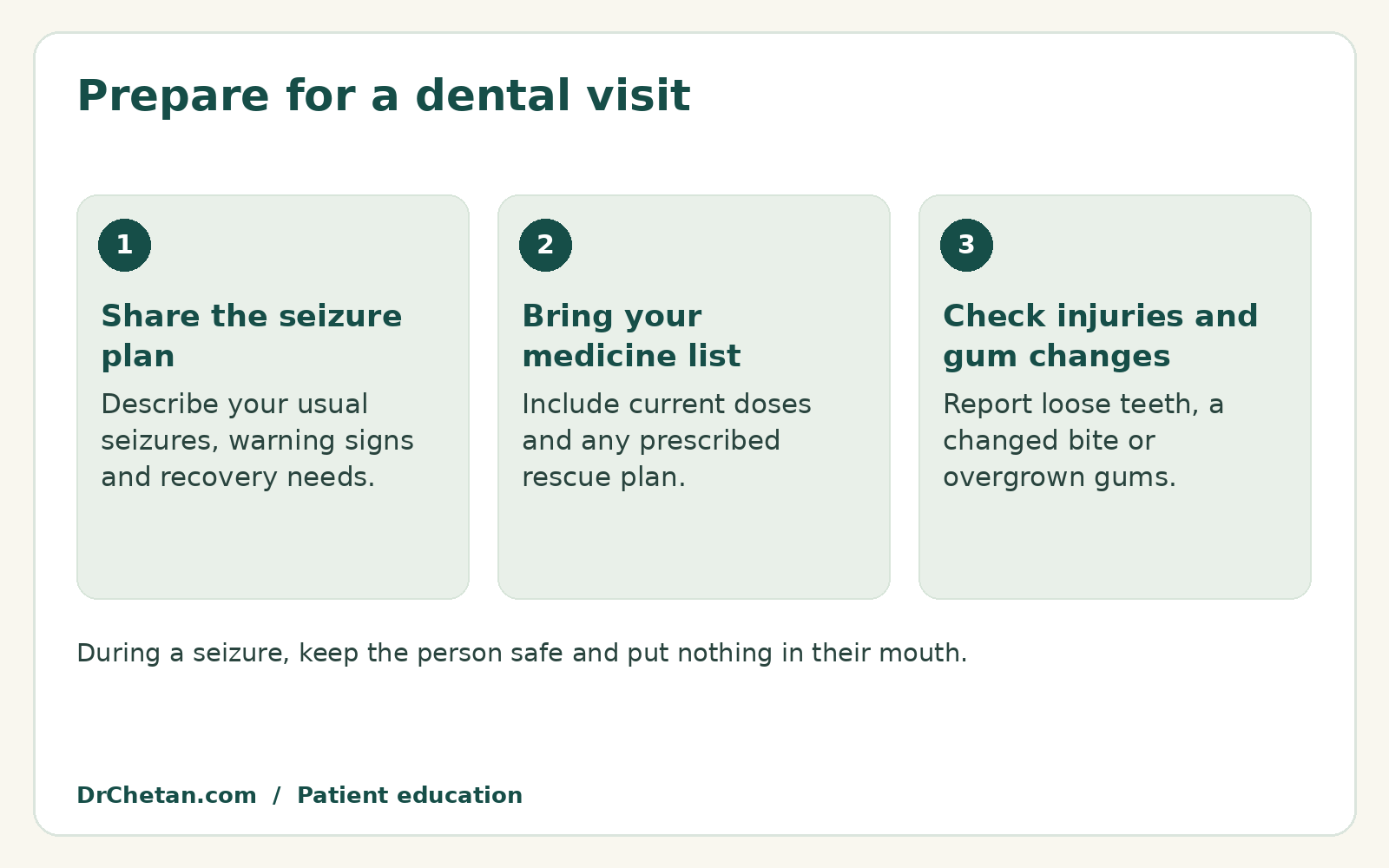
Bring a list of medicines, doses and allergies. Tell the dentist when your last seizure occurred, whether you notice a warning, and what helps while you recover. If you have prescribed rescue medicine, explain when it is used and who is trained to give it. Bring a written seizure action plan if you have one.
Keep taking prescribed medicines as directed. If you have been asked to fast for sedation, confirm how to handle food and medication with the treating team in advance. Tell the dental practice if your seizure pattern has recently changed.
How the team can adapt the appointment
Ask if there is a time of day that works better for you and whether shorter visits or breaks would help. The dentist can agree on a signal to pause and discuss how they would respond if you feel an aura. If sedation is proposed, share your medicines and seizure history so the team can assess it.
Watch for mouth changes
Some medicines, particularly phenytoin, can contribute to gum enlargement. Tell the dentist if the gums are growing over teeth, bleeding or making cleaning difficult. Ask for help with daily plaque control and whether the prescribing team should be involved. Do not change the medicine on your own.
After a seizure, arrange assessment for broken, loose or displaced teeth, an altered bite or a deep cut. Seek urgent help for heavy bleeding, a major injury or breathing difficulty.
What a companion should know about first aid
Follow the person's seizure plan. Keep them safe from nearby hazards, time the seizure and do not put anything in their mouth. Do not restrain them or give food or drink until they are fully alert. Call emergency services if the seizure lasts more than five minutes, another follows without recovery, or the person has trouble breathing or waking afterwards, or has a serious injury.
Frequently asked questions
Can I have a routine check-up with epilepsy?
Often yes. The team can plan the visit using your health history and seizure pattern.
Will all epilepsy medicines affect my gums?
No. The effects depend on the medicine and the person. Ask your dentist to check any new changes.
Should I wear a mouthguard during a seizure?
Do not insert a mouthguard or any object during a seizure. Ask your dentist about protection for separate activities, such as sports.
References and further reading
- University of Washington School of Dentistry: dental care for adults with epilepsy
- CDC: first aid for seizures
Featured image is an AI-created editorial illustration.

Leave a Reply