
Many minor mouth ulcers heal within one to two weeks, but a persistent or unusual sore needs examination. Gentle mouth care and avoiding irritation may help comfort while it heals. If the same ulcer has not healed after two weeks, arrange a dental assessment; seek help earlier if it is worsening or has concerning features.
What is a mouth ulcer?
An ulcer is a break in the surface lining of the mouth. It may feel particularly sore when touched by food or a toothbrush. The word describes the appearance of a problem, not one single diagnosis. Different conditions can produce sores that look similar to an untrained observer.
Common possibilities include trauma from biting, a sharp tooth or an ill-fitting appliance, and recurrent aphthous ulcers, sometimes called canker sores. These recurrent ulcers are different from cold sores. Do not assume every mouth sore is the same condition or is contagious—or non-contagious—without knowing the cause.
Why might ulcers keep coming back?
Repeated episodes can have several contributors. Local injury, some medicines, nutritional deficiencies and certain medical conditions may be relevant. A dentist or doctor may ask about patterns, other symptoms and your general health before deciding whether investigation is useful.
Notice whether each ulcer heals completely before another appears, or whether one spot never heals. That distinction is more useful than simply saying “I often get ulcers”. An ulcer repeatedly appearing beside a sharp tooth also deserves examination rather than indefinite use of pain-relieving gel.
Routine vitamin supplements are not a substitute for finding the cause. A blood test or medical referral may be appropriate in selected cases, but not everyone with one small ulcer needs a large panel of tests.
What can I do safely while waiting?
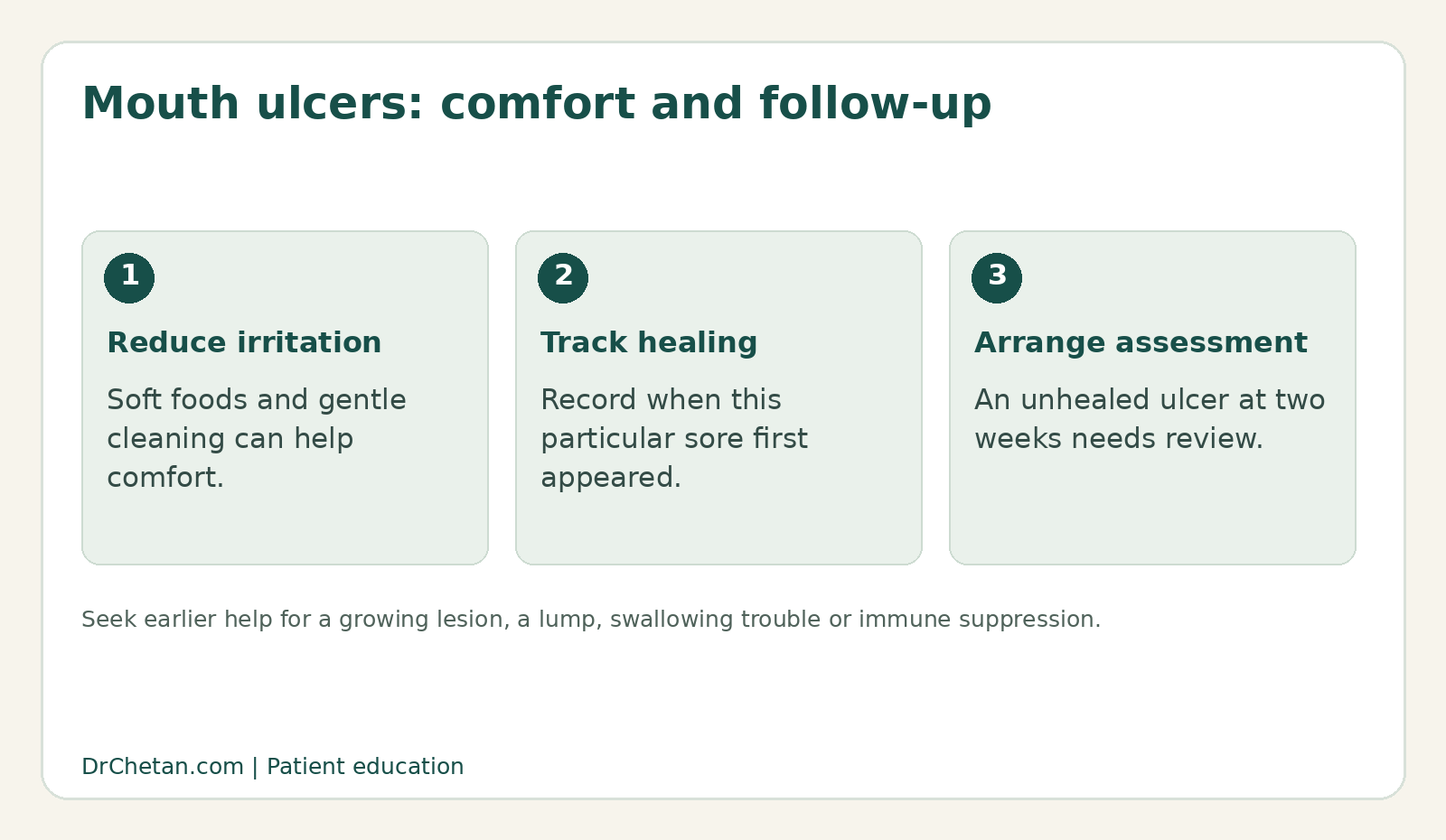
- Use a soft toothbrush and clean gently, avoiding direct scrubbing of the sore.
- Choose softer foods and avoid foods or drinks that sting, especially very hot, spicy, acidic or rough-textured items.
- Keep up appropriate fluids, within any medical fluid restriction.
- A pharmacist can advise on a suitable protective or pain-relieving product, taking age, pregnancy, other medicines and medical conditions into account.
- Ask the dentist to check a sharp tooth, filling, denture or orthodontic appliance that keeps rubbing.
Do not burn the area with aspirin, concentrated chemicals or undiluted remedies. Avoid repeatedly scraping the sore. Stronger treatments, including steroid medicines for selected diagnoses, should follow appropriate professional assessment.
When should I get an ulcer checked?
Arrange assessment if the same ulcer has not healed after two weeks, is growing or keeps worsening. Published patient resources use slightly different time thresholds; two weeks is a practical point to arrange review, not a reason to delay a concerning lesion until a deadline.
Book earlier for an unexplained firm area, lump, red or white patch, bleeding without a clear cause, neck swelling or trouble swallowing. A persistent ulcer can have a harmless explanation, but appearance or lack of pain cannot reliably exclude something more serious.
Also seek advice for unusually large or numerous sores, frequent episodes that disrupt eating, new ulcers after starting a medicine, or ulcers with symptoms elsewhere, such as joint problems, genital ulcers or bowel symptoms. Explain these features rather than treating each episode as an isolated dental issue.
What happens at the appointment?
The dentist asks when the sore began, whether previous ulcers healed, and about injury, medicines, tobacco or chewing products and other symptoms. They examine the whole mouth rather than only the painful point, and may check nearby teeth, appliances and the neck.
A clear source of rubbing may be corrected, with a specific review date to confirm healing. Persistent or suspicious changes may need referral to oral medicine or oral surgery and sometimes a biopsy. A biopsy is a tissue sample examined in a laboratory; referral for one does not itself mean cancer has been diagnosed.
When is more urgent help needed?
Seek prompt care if pain prevents adequate eating or drinking, you appear dehydrated, or swelling or infection is developing. Breathing or significant swallowing difficulty needs emergency medical attention. If you have chemotherapy-related immune suppression or another significant immune problem, contact your treating team early for new sores or fever; do not wait two weeks.
For a change that looks more like a patch than a break in the lining, the dentist still needs to assess it. Taking a dated photograph can help describe change, but a photograph does not replace an examination.
Frequently asked questions
Does every ulcer need antibiotics?
No. Many common ulcers are not caused by a bacterial infection. Treatment should match the diagnosis.
Is a white or yellow centre always pus?
No. The surface of an ulcer can have a pale covering during healing. Do not squeeze or scrape it to test.
Can an ulcer be serious if it does not hurt?
Yes. Pain is not a reliable screening test. A persistent or unusual change still needs review.
References and further reading
- NHS: Mouth ulcers
- Oral Health Foundation: Mouth ulcers
- NIDCR: Oral cancer and persistent mouth changes
- NHS: Urgent dental care, including ulcers lasting two weeks
- ADA: Oral cancer guideline
Sources checked 2 November 2026. This is general patient education; an examination and an individual treatment plan may be needed.

Leave a Reply