
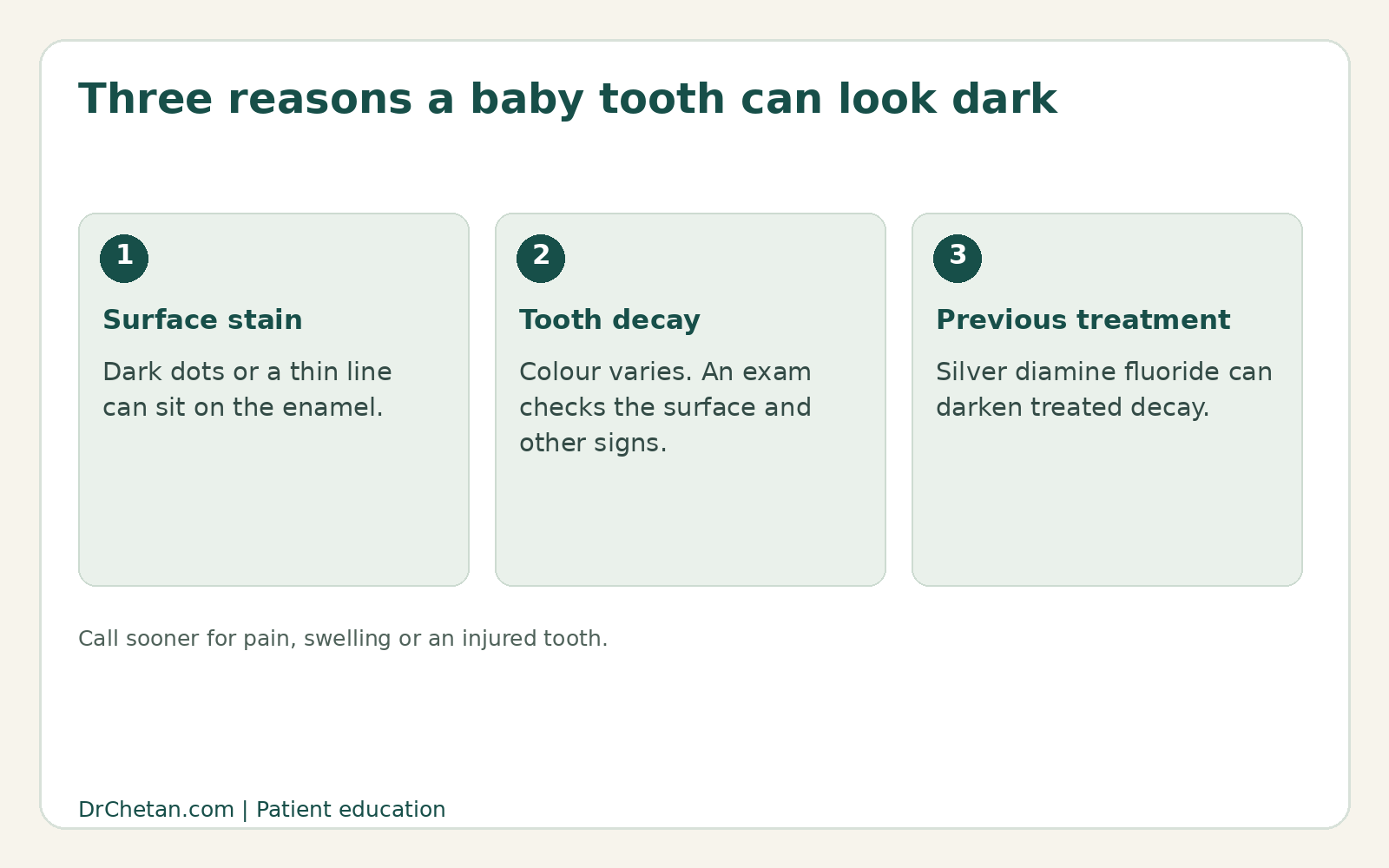
A black spot on a baby tooth can be surface stain, tooth decay or a change from previous treatment. Colour alone cannot tell you which it is. Arrange a dental check for a new or unexplained spot, even if your child has no pain.
Look at the pattern without trying to scrape it off
A fine row of dark dots or a narrow dark line near the gum on several teeth can be a form of surface stain. The tooth underneath may be sound. A spot in a groove, near the gum or between two teeth can also be decay. A hole, chipped edge or food catching in one place gives the dentist useful information. Some cavities are pale or brown, and a dark spot may look similar whether it is on sound enamel or a damaged surface.
If a whole tooth has turned grey or dark after a fall, tell the dentist when the injury happened. That is a different pattern from black dots along the gumline. If the dentist previously used silver diamine fluoride, the decayed part of the tooth can turn black as expected. The treating clinic can tell you what it treated and when the area needs reassessment.
What the dentist checks
The dentist may clean and dry the surface before looking for changes in its shape, texture and colour. They ask about symptoms, any previous treatment and whether the spot is changing. An X-ray may help when the dentist suspects hidden decay between teeth or wants to check a previously injured tooth. The choice depends on the examination, the child’s needs and whether the image will change the plan.
What treatment might involve
Surface stain can sometimes be professionally polished if the child is comfortable and it is appropriate. It may recur. If there is decay, the dentist considers how deep it is, whether the surface is intact and how long the tooth is expected to stay. Options may include prevention and monitoring, a treatment to arrest decay, repair of a cavity or other care if the tooth is infected. An early examination gives you more time to discuss those choices.
What to do while waiting
Keep brushing gently with age-appropriate fluoride toothpaste. Avoid scraping the spot or using whitening strips, abrasive powders or acidic home remedies. Take a clear photo to show changes if your child is comfortable. Call sooner for toothache, pain on chewing, swelling or a pimple on the gum. Facial swelling with fever or a child who seems very unwell needs urgent assessment. Seek emergency help for difficulty breathing or swallowing.
Frequently asked questions
If the spot brushes off, does that rule out decay?
Loose debris can brush away, but this does not tell you whether there is damage underneath. Ask for an exam if the surface still looks unusual or symptoms are present.
Can black stain and decay occur together?
Yes. One stained tooth does not rule out a cavity on that tooth or elsewhere.
Is decay in a baby tooth worth treating?
A baby tooth can become painful or infected before it is due to fall out. The dentist can explain whether prevention, repair or another option makes sense.
Related guide: Early childhood tooth decay.
References and further reading
- AAPD: Clinical guidance on silver diamine fluoride
- Study of black tooth stain and caries in children
- NHS: Tooth decay
Sources checked 3 November 2026. General patient education. Discuss your individual care with your clinical team. Featured image is an AI-created illustration.

Leave a Reply