
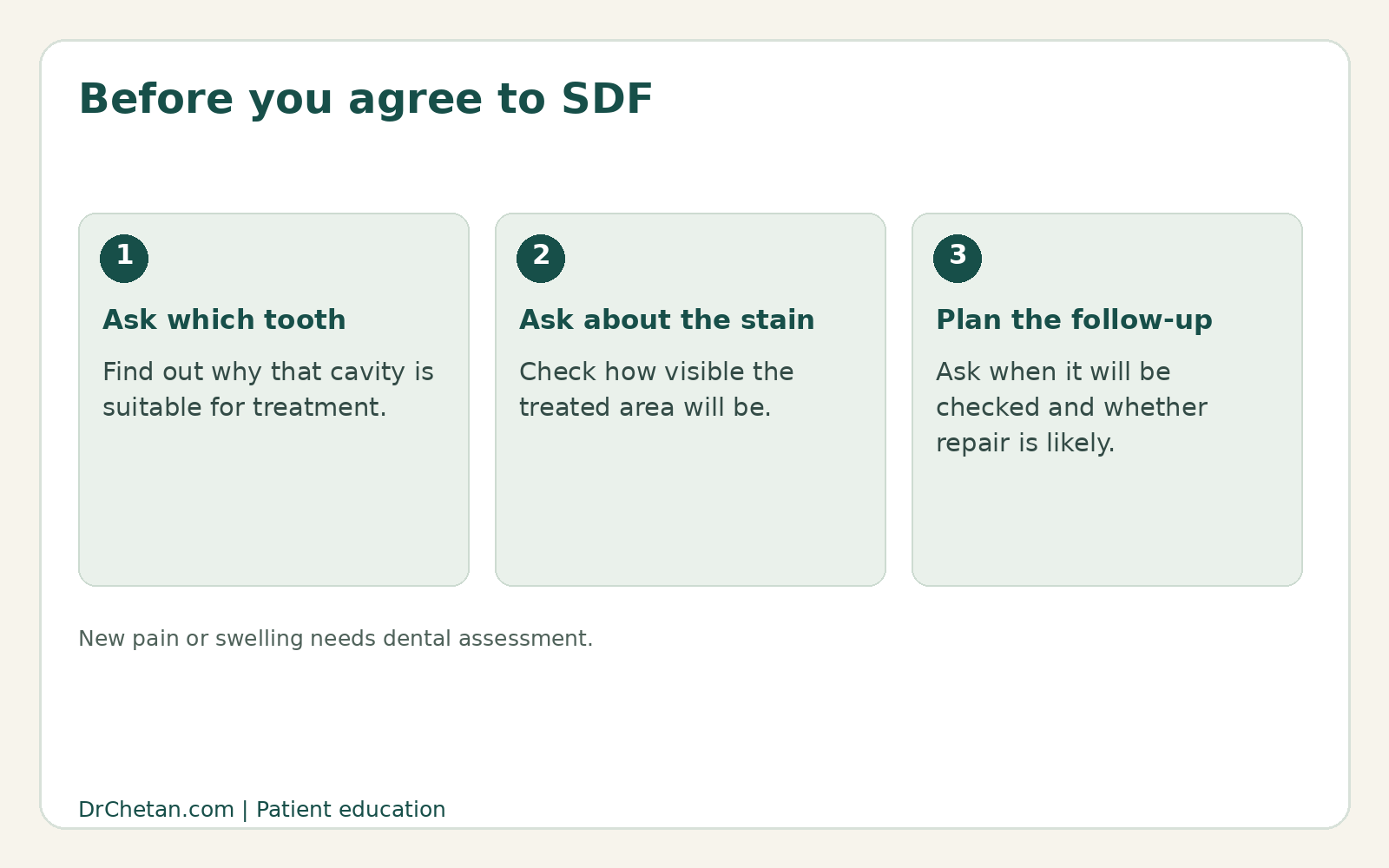
Silver diamine fluoride, or SDF, is a liquid a dentist can apply to selected cavities to help stop decay progressing. The treated decayed area usually turns dark brown or black. Ask the dentist to show you exactly where the stain is likely to be visible before you decide.
Why the dentist may suggest it
SDF contains silver and fluoride. A dentist may offer it when a child has several cavities, when conventional treatment is difficult to tolerate right now, or when an exposed root surface in an adult is suitable. Sometimes it buys time until definitive care is possible. It may also be part of a longer-term plan for selected teeth that can be monitored. The right choice depends on symptoms, the tooth and the chance of keeping it comfortable and functional.
What the appointment involves
The dentist examines the tooth and may take X-rays if they would change the plan. They ask about pain, swelling and allergies, explain staining and discuss alternatives. During application they isolate the tooth, protect nearby tissues and paint a small amount onto the lesion. Application usually takes only a short time and often needs neither drilling nor a numbing injection. Temporary staining of skin or soft tissue and brief irritation can occur.
Why colour alone cannot tell you whether treatment worked
The silver compounds darken the decayed part of the tooth. The stain on that tooth surface is usually permanent unless the stained area is removed or covered by a later restoration. A dark area can still need treatment. The dentist checks whether it has hardened, whether it is growing, and whether there are symptoms. Follow-up and repeat application may be advised.
When another treatment makes more sense
SDF cannot rebuild a missing wall or restore how teeth meet. A filling or crown can help restore shape and function where indicated. A tooth with signs of nerve involvement or infection needs assessment for a different treatment, which may include pulp treatment or extraction. Tell the team about a known silver allergy or sores in the area. Contact the dentist promptly if pain develops, the gum swells or a pimple appears near the tooth.
Frequently asked questions
Is SDF the same as fluoride varnish?
Both deliver fluoride, but SDF also contains silver and is used in selected cases to arrest existing decay. Varnish is commonly used for prevention.
Will every tooth turn black?
The visible staining chiefly affects the treated decayed area. Ask the dentist to point out the surfaces they intend to treat.
Does my child still need dental visits?
Yes. Follow-up checks whether the cavity is stable and whether the tooth needs repeat treatment, repair or a different approach.
References and further reading
Sources checked 3 November 2026. General patient education. Discuss your individual care with your clinical team. Featured image is an AI-created illustration.

Leave a Reply