
A white spot on a child’s tooth can be an early sign of decay or a difference in how the enamel formed. A spot’s colour alone cannot tell you which. Book a dental check if you notice a new or changing patch, especially near the gumline or on a tooth that has recently come through.
Patterns the dentist looks for
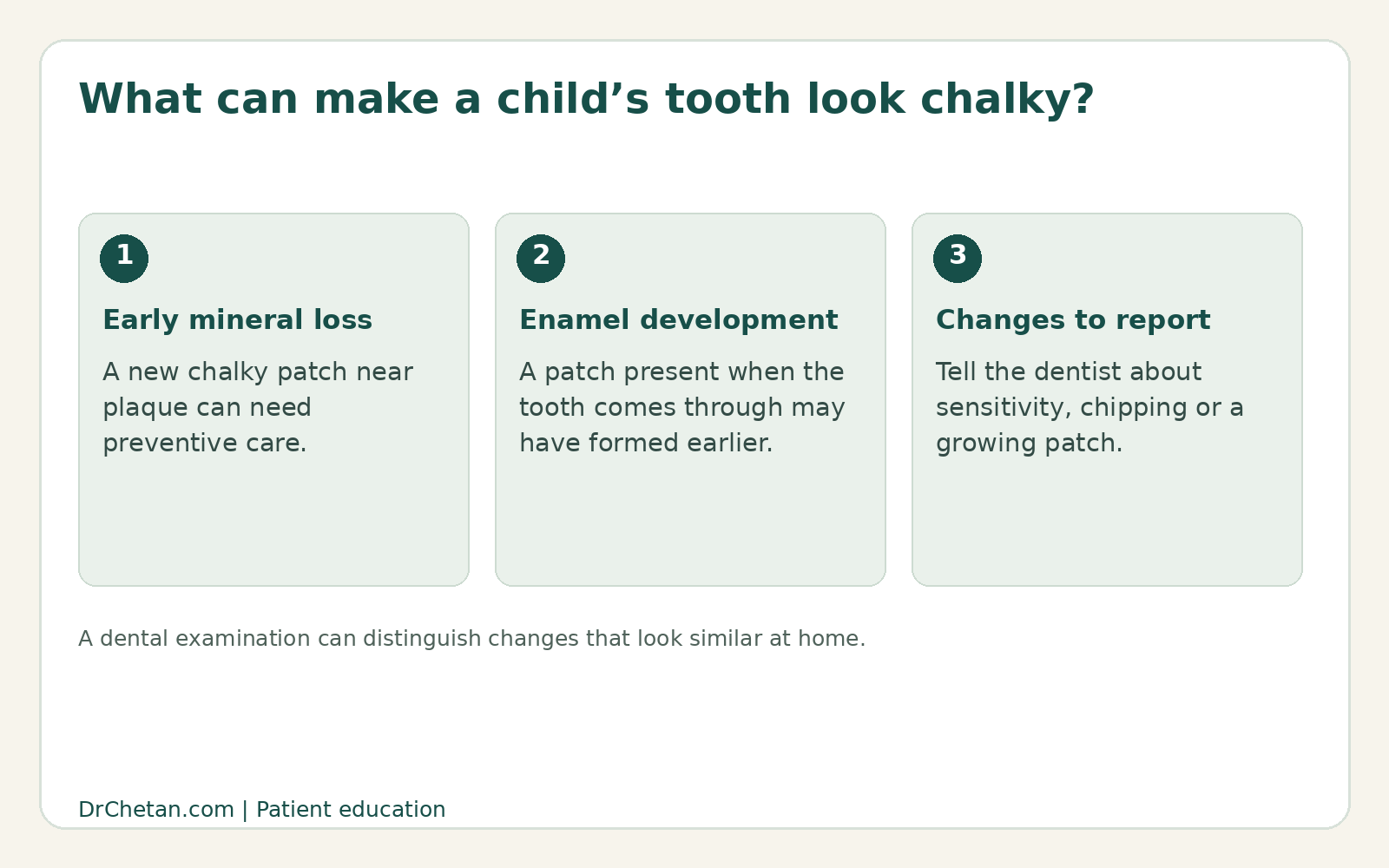
A chalky area near the gumline or around a brace bracket can be an early sign of mineral loss where plaque collects. The surface can look more obvious after it dries. Before a hole forms, a dentist can often help manage the area with prevention, fluoride and follow-up. A shiny, smooth or longstanding mark may need a different assessment.
Enamel changes can already be present when a tooth comes through. Diffuse, faint streaks across several similarly developing teeth can occur with fluorosis. Sharply bordered cream, white or yellow-brown patches on first permanent molars, sometimes with marks on incisors, can occur with molar-incisor hypomineralisation. Affected molars may be sensitive or chip after eruption. Other enamel differences can follow an injury to a baby tooth or have other developmental causes. These patterns guide the examination rather than establishing a diagnosis at home.
What happens at the check
Tell the dentist when you first saw the spot and whether your child has pain, sensitivity, braces, or a history of a tooth injury. The dentist may clean and dry the enamel, look at the patch and adjacent teeth, and check whether the surface is intact. If the problem may extend between teeth or underneath the surface, an X-ray can be useful when it would change care.
How treatment depends on the cause
The dentist may advise brushing support, changes in snack frequency, fluoride varnish or closer review for early decay without a hole. A weakened permanent molar may need protection, a sealant or restoration, depending on symptoms and how much enamel is affected. Stable enamel marks may only need monitoring. If appearance becomes a concern, ask which options suit your child’s age and the cause of the colour difference.
What you can do now
Help your child brush twice daily with age-appropriate fluoride toothpaste and avoid scrubbing the spot, picking at it or using whitening products. A photo in ordinary light can help document a change. Contact the dentist sooner if there is pain, new sensitivity, a visible hole, or part of the tooth has chipped. Swelling with fever needs urgent dental assessment. Get emergency help for difficulty breathing or swallowing.
Frequently asked questions
Does a white patch mean my child uses too much fluoride?
There are several possible causes. Ask about the pattern and review the amount of toothpaste your child uses before changing their fluoride routine.
Can the spot go away?
Early mineral loss can improve or stabilise, but the mark may remain visible. Developmental marks can persist even when the tooth is healthy.
What if it is on a baby tooth?
Baby teeth can develop early decay and enamel defects too. An exam helps decide whether prevention, treatment or monitoring is appropriate.
References and further reading
- AAPD: Caries risk assessment and management in children
- AAPD: Molar-incisor hypomineralisation
- AAPD: Fluoride therapy
Sources checked 3 November 2026. General patient education. Discuss your individual care with your clinical team. Featured image is an AI-created illustration.

Leave a Reply