
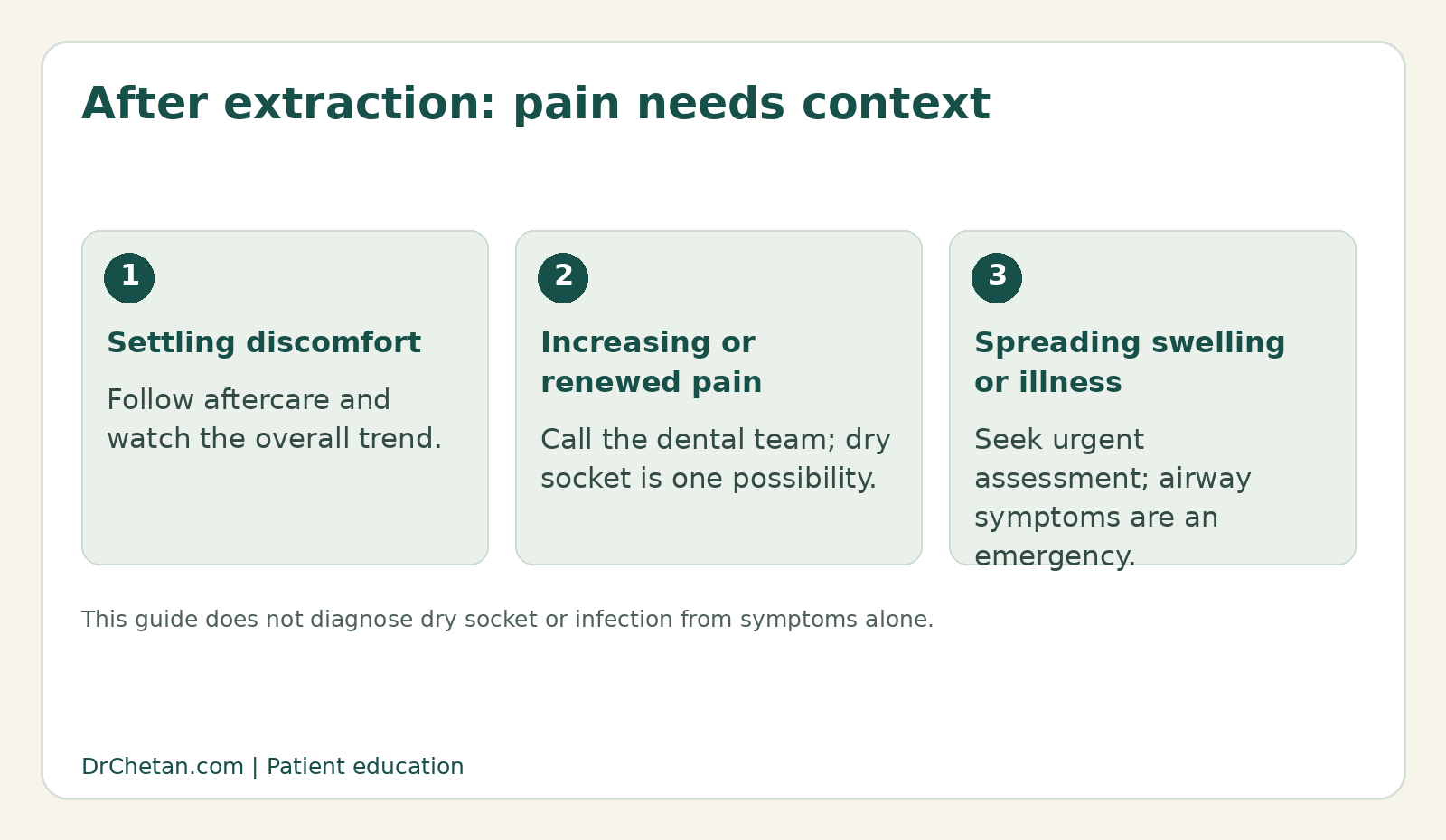
Some soreness after a tooth is removed is expected, but severe, increasing or renewed pain needs advice. Dry socket is one possible cause; infection and other problems can also occur. The direction of recovery and the accompanying symptoms are more useful than judging the socket from a photograph.
What does ordinary recovery feel like?
As the anaesthetic wears off, the socket and nearby tissues may feel sore. More involved surgery can also cause swelling, bruising and jaw stiffness. Discomfort is often most noticeable during the early days and should then begin to settle, although individual timelines vary.
Follow the pain-relief plan provided and the instructions for eating and mouth care. Contact the practice if the plan is not enough or the trend worries you; you do not have to wait until a stated number of days has passed.
What is dry socket?
After extraction, a blood clot normally protects the socket while healing begins. In dry socket, that protection fails to form adequately or is lost or breaks down. The resulting inflammation can cause substantial pain.
Symptoms often develop a few days after removal. Pain may become more intense or return after an initial improvement, sometimes spreading towards the ear or temple. There may be an unpleasant taste or smell. These features suggest the need for assessment; none establishes a diagnosis on its own.
Is it the same as an infection?
No. Dry socket is not simply another name for a bacterial infection and does not automatically require antibiotics. A dentist needs to check for infection and other causes as well. Increasing facial swelling, fever, pus or feeling generally unwell is particularly important to report.
Do not pick at the wound to look for bone or assume that a pale healing surface is pus. Appearance alone is unreliable, and disturbing the area can make it harder to heal.
What will the dentist do?
The dentist asks when the tooth was removed, how pain has changed, which medicines you have taken and whether there are other symptoms. They examine the socket and surrounding tissues. Further tests or imaging are used when indicated, not automatically for every sore socket.
If dry socket is diagnosed, the team may gently clean or irrigate the area and use a medicated dressing for symptom relief. The pain-control plan and follow-up depend on the findings. Some dressings need review or replacement. Do not pack substances into the socket yourself.
What should I do while waiting?
- Contact the treating dentist or surgeon and describe the timing and severity.
- Use only suitable pain medicines as directed; ask a pharmacist about interactions.
- Follow the aftercare instructions for your stage of recovery.
- Avoid smoking and do not probe the socket.
- Do not use leftover antibiotics, strong mouth chemicals or unprescribed socket dressings.
Do not forcefully rinse or spit during the first day unless specifically instructed otherwise. Later gentle rinsing may be advised. Ask the team before using a syringe or water flosser near a healing socket.
Can dry socket be prevented?
Following aftercare and avoiding tobacco can reduce risk, but a complication is not proof that a patient did something wrong. Difficult extractions, previous dry socket and other factors may contribute. Tell the team about your history before surgery.
Routine medicines or rinses are not suitable for everyone. Follow an individual plan rather than copying a prevention recipe from social media.
When is it urgent?
Get prompt dental advice for severe pain, worsening symptoms, new swelling or fever, or bleeding that does not stop with the pressure method you were shown. Trouble breathing or swallowing, major spreading swelling or uncontrolled heavy bleeding requires emergency medical care.
Frequently asked questions
Does every painful socket need antibiotics?
No. Treatment depends on the diagnosis. Local treatment and pain control are often central in dry socket.
Can I tell by looking whether the clot is missing?
Not reliably. A dental examination is safer than repeatedly inspecting or touching the wound.
Will another visit be needed?
Sometimes. Ask what improvement to expect, whether a dressing needs checking and when to call if relief does not last.
References and further reading
- MedlinePlus: Dry socket
- Guy’s and St Thomas’: Dental surgery and recovery
- Hull University Teaching Hospitals: Wisdom tooth removal
- NHS inform: Wisdom tooth removal
- UCLH: Dental extraction aftercare
Sources checked 2 November 2026. This is general patient education; an examination and an individual treatment plan may be needed.

Leave a Reply