
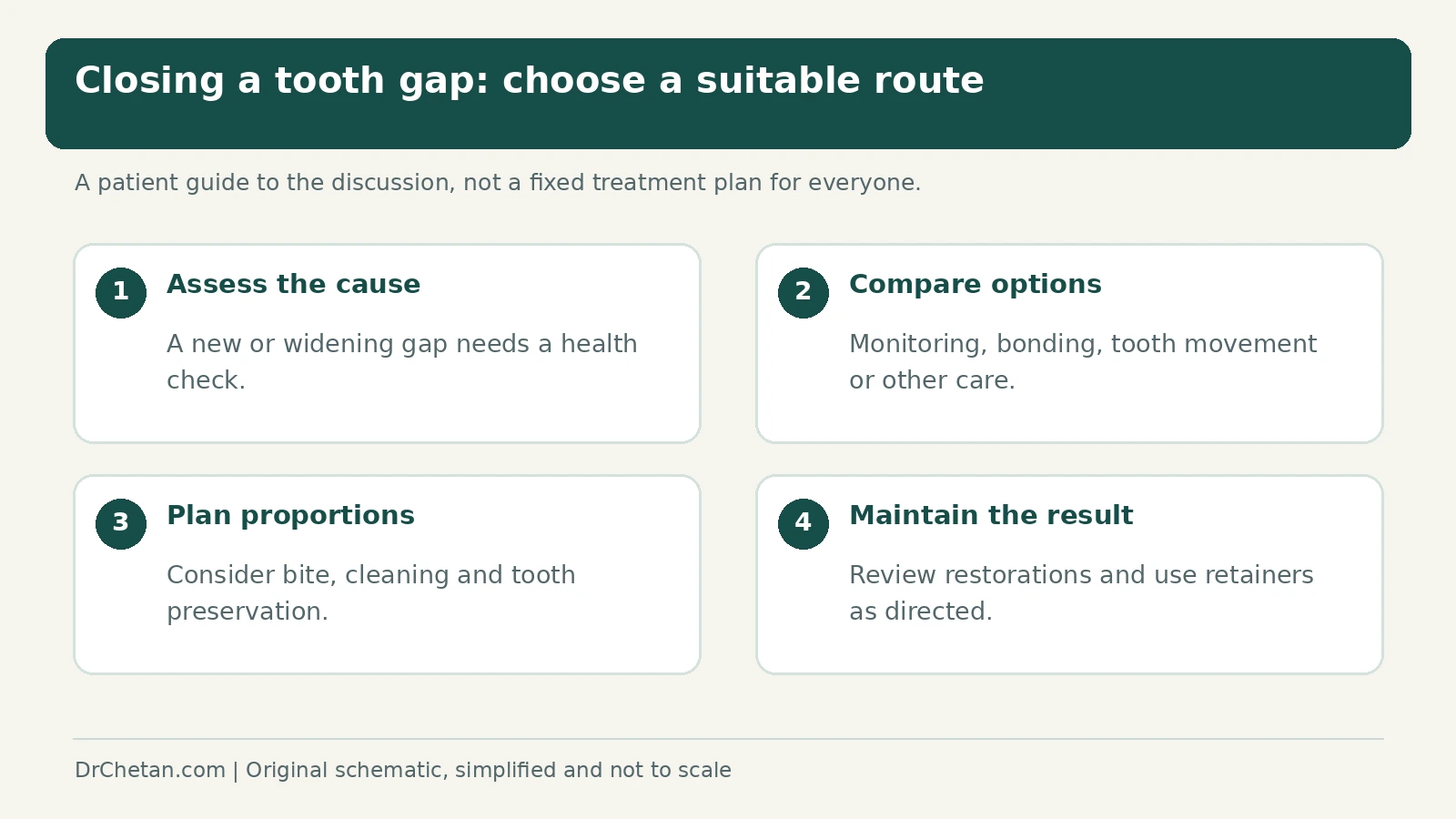
A gap between teeth can be a normal feature of a healthy smile. If you want it changed, or it has recently appeared or widened, the dentist first checks why it is there. Closing a space can mean moving teeth, changing their shape, replacing a missing tooth or treating gum disease; these are different plans.
Does every gap need treatment?
No. A stable gap that is easy to clean and does not affect function may need no treatment. Your preference matters, including choosing to keep it. A new or widening gap in an adult, especially with bleeding, loose teeth or a changed bite, needs assessment for an underlying problem before cosmetic closure.
Children’s teeth also change as they develop. Spacing in baby teeth and some stages of permanent-tooth eruption can be normal. A child’s gap should be assessed in the context of growth and eruption rather than automatically bonded shut. The plan may be observation or an orthodontic opinion.
Why are there spaces between my teeth?
Teeth may be small in relation to the available jaw space, a tooth may be missing or unusually shaped, or positions and habits may influence the spacing. A prominent fold of tissue between the upper lip and gum can be relevant in some midline gaps, but its appearance alone does not decide treatment. Gum disease can allow teeth to move and spaces to develop.
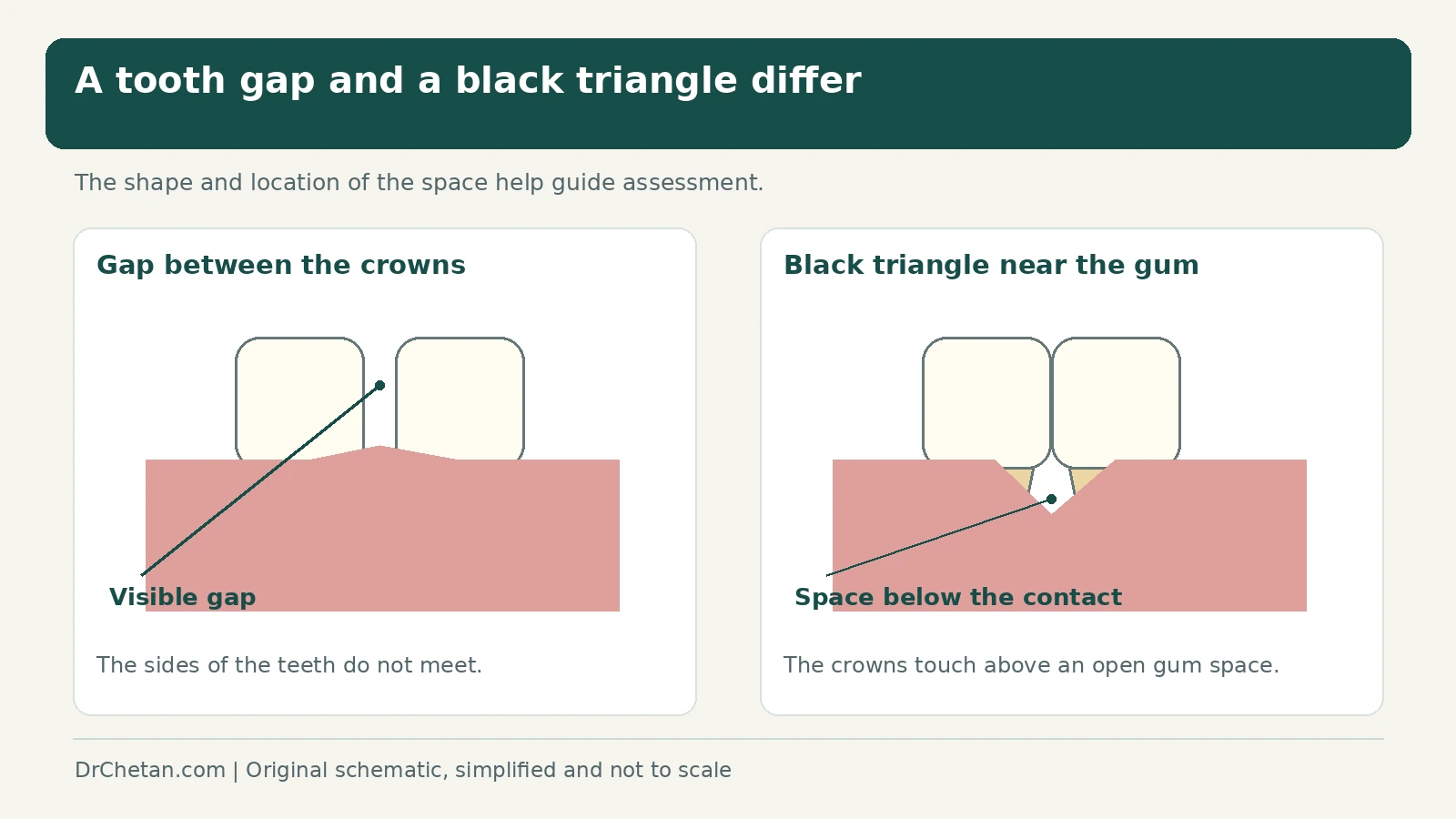
A gap between the full sides of teeth is different from a dark triangular space near the gum when the crowns still touch. This “black triangle” relates to tooth shape, tooth position and the gum between teeth. It may need a different plan from a conventional diastema.
What does the dentist check before suggesting treatment?
Expect questions about when the gap appeared, whether it is changing, previous braces and retainers, habits, gum symptoms and what you want improved. The dentist examines tooth sizes, alignment, gum health and the bite. Photographs, scans or impressions may help compare options; X-rays are selected when needed to assess roots, missing teeth or support.
Ask to see how the proposed result affects tooth proportions and cleaning. Closing a space by making teeth wider is different from moving their roots and crowns. The fastest-looking option may not address the reason the space formed.
How does composite bonding close a small gap?
For suitable small spaces, the dentist adds tooth-coloured resin to one or more teeth. After planning the shape and shade, the surfaces are prepared for bonding, isolated and treated with the bonding materials. Resin is added, shaped, hardened with a curing light and polished. The dentist checks the bite and the contact between teeth.
Bonding can often be completed in one treatment visit and may involve little or no removal of sound tooth structure, depending on the case. It does not move roots or correct a significant bite problem. Material can stain, chip or need repair, and a poorly planned shape can make teeth look too wide or make cleaning harder. Ask about maintenance as well as the immediate appearance.
How do braces or clear aligners close gaps?
Orthodontic treatment moves teeth gradually rather than adding material. Planning considers where the roots should finish, the bite and how space is distributed. Braces use brackets and wires; aligners use a sequence of fitted trays and may need attachments or other measures. Some cases need a combination of tooth movement and later bonding for tooth-size differences.
Treatment length varies with complexity and cooperation. Aligners are not suitable for every pattern of spacing, and a scan alone does not replace a clinical examination. Retainers are an important part of the plan because spaces can reopen after teeth have moved. Ask about long-term retention before starting.
What about veneers, missing teeth or a frenectomy?
Veneers may be considered when tooth shape or other appearance concerns are involved. They carry maintenance needs and may require irreversible preparation, so they should not be presented as the default for otherwise healthy teeth with a small gap.
If a tooth is missing, the plan may involve opening or closing space orthodontically, or replacing the tooth with a suitable bridge, implant or denture. A frenectomy removes or releases a tissue attachment in selected cases. It is not a universal gap treatment and does not reliably close an adult gap by itself; timing is coordinated with the overall plan.
What will happen at the appointment, and will it hurt?
The first appointment usually focuses on assessment and options. Simple bonding may need little preparation, while other procedures can require local anaesthetic. Orthodontic movement can cause temporary tenderness. Ask what is likely for your case rather than assuming every gap-closing treatment is pain-free or completed immediately.
Your plan should explain the number of visits, any tooth preparation, the expected appearance, cleaning, repair or replacement needs and what happens if you choose no treatment. A mock-up may help you judge tooth proportions before committing to a cosmetic change.
How should I care for the area?
Keep brushing with fluoride toothpaste and clean between teeth using a suitable aid. After bonding, the contact still needs to allow proper cleaning. Follow retainer instructions after orthodontics and attend reviews. Do not use elastic bands to pull teeth together at home: uncontrolled movement can damage gum and supporting tissues.
If a gap suddenly widens, a tooth becomes loose or the bite changes, arrange a dental check instead of waiting for a cosmetic consultation alone.
Frequently asked questions
Can a gap be closed without braces?
Some small spaces can be managed with bonding or another restoration, but suitability depends on tooth proportions, gum health and the bite. Other gaps are better managed by moving teeth.
Is bonding permanent?
It is a maintained restoration, not a lifetime guarantee. It can stain, chip or need repair or replacement.
Will my gap reopen after braces?
Spaces can relapse. Retainers and review help maintain the result; ask about the long-term plan before treatment.
Does a gap always mean I need a frenectomy?
No. The tissue attachment is only one part of the assessment, and surgery is not appropriate for every gap.
Can I close a gap with an elastic band?
Do not try this. Uncontrolled forces and a band slipping towards the roots can damage the supporting tissues. Teeth should be moved under professional supervision.
Related reading: How to clean teeth with braces.
Sources and further reading
- American Association of Orthodontists: Teeth spacing, causes and treatment options
- Canadian Dental Association: Bonding and veneers
- American Dental Association: Veneers
- NIDCR: Periodontal gum disease
- American Association of Orthodontists: Risks of DIY gap bands
Educational information for patients. Diagnosis and treatment depend on an examination and your individual circumstances. Consultation artwork is AI-created; explanatory diagrams are original simplified schematics.

Leave a Reply