
Diabetes does not automatically prevent tooth extraction. The dentist considers your current health, glucose control, medicines, the reason for removal and how you will manage eating and recovery. A planned extraction and a spreading infection are different situations, so the balance of risks may differ.
Why does diabetes matter to dental surgery?
When blood glucose is not well controlled, infection and delayed healing can be greater concerns. Diabetes can also affect the gums and other oral tissues. Conversely, pain, infection and disrupted food intake can complicate day-to-day diabetes management.
The aim is not to attach one rule to everyone with diabetes. A person with stable control having a straightforward procedure may need a different plan from someone with recent severe lows, illness, kidney disease or a more complex operation.
What should I bring to the appointment?
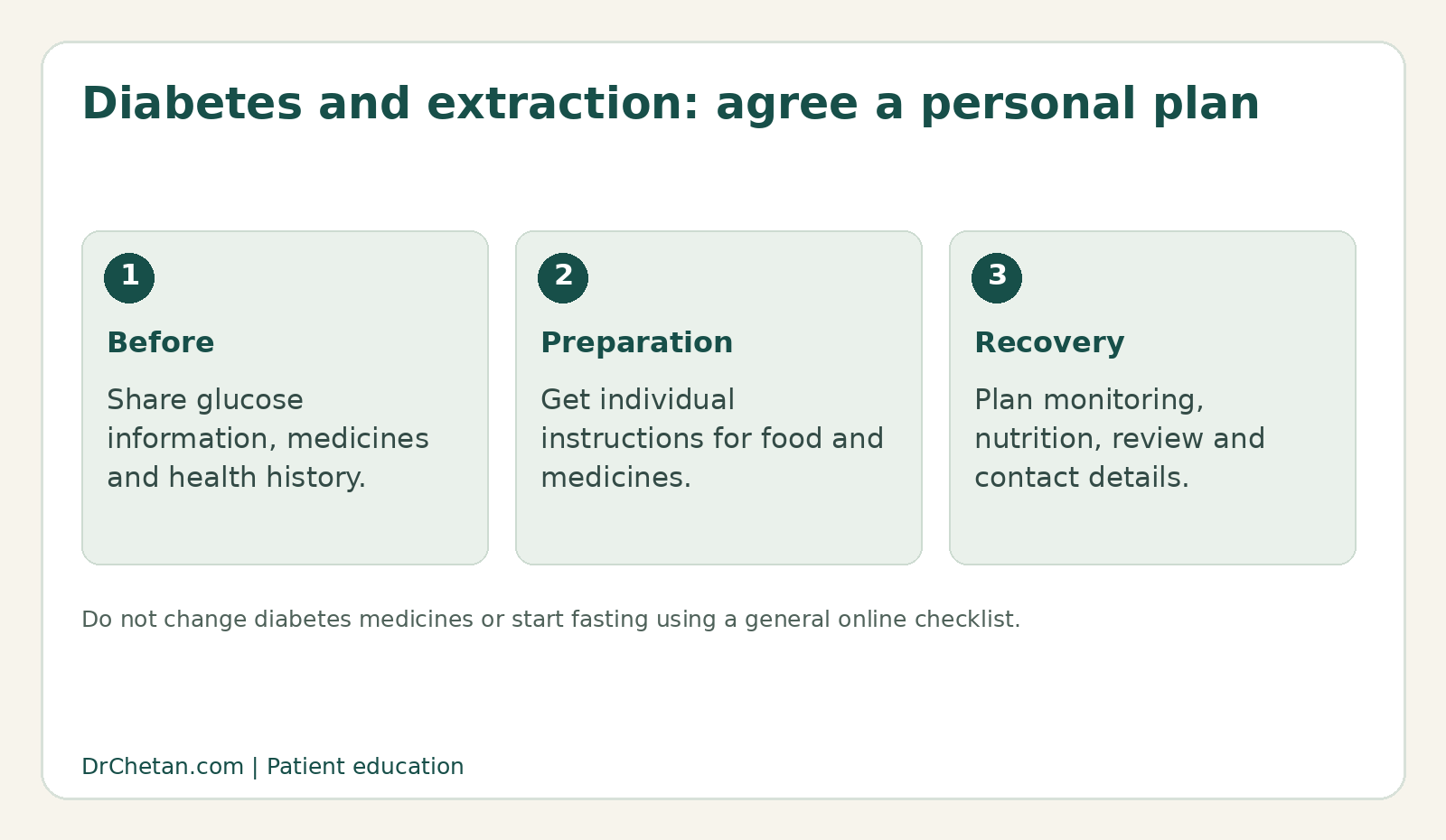
- The type of diabetes you have and the contact details of the team managing it.
- A current medicine list, including insulin, tablets and injectable medicines, with timing.
- Recent glucose records and HbA1c results if available or requested.
- Details of severe low-glucose episodes, recent illness or hospital treatment.
- Other conditions, allergies and previous problems with healing or dental treatment.
Bring your usual glucose-monitoring equipment and the supplies you normally use for a low-glucose episode. Tell the practice in advance if you need help recognising or managing a low.
Is there one “safe sugar level” for extraction?
A single internet number cannot replace an individual assessment. HbA1c provides information about longer-term control, while a current reading answers a different question. The dentist interprets the available information alongside symptoms, the urgency of the dental problem and your medical circumstances.
The team may request further information or coordinate with your diabetes clinician. Elective care sometimes needs optimisation first, but an urgent infection should not simply be left without a treatment plan while a target number is pursued.
Should I skip food or change my medicines?
Do not fast, omit insulin or change tablets on your own. Ask for clear instructions before the procedure. Local anaesthetic care usually has different preparation requirements from sedation or general anaesthesia.
If fasting is needed or eating afterwards will be difficult, the diabetes and dental teams may need to agree a food, medicine and monitoring plan. Some medicines require special consideration around illness or surgery. Give the team the exact names rather than asking whether all “diabetes tablets” should be stopped.
What will the dentist do during treatment?
After examining the tooth and taking indicated images, the dentist explains whether it can be saved and why removal is recommended. Anaesthetic, appointment length and the treatment setting are chosen for the individual. The team also needs to know how to respond if you become unwell during the visit.
Antibiotics are not a substitute for treating the source of an infection and should not be self-started. Whether they are needed depends on the clinical problem and wider health assessment; having diabetes alone is not a reason to assume everyone receives the same prescription.
How should recovery be planned?
Before leaving, ask what you can eat, how to take prescribed medicines, how often to check glucose and whom to contact. Softer food choices should still fit the nutrition and diabetes plan agreed for you. Avoid treating “soft diet” as permission to live on sweet drinks or to skip necessary meals.
Follow socket-care instructions and the arranged review. Call for increasing swelling, fever, worsening pain, persistent bleeding, difficulty eating or drinking, or glucose problems you cannot manage under your usual plan. Breathing or swallowing difficulty, confusion or severe illness requires emergency help.
Frequently asked questions
Will a local anaesthetic always be unsafe?
No. The anaesthetic and procedure are selected according to your health and the treatment required.
Should I delay an infected tooth until glucose improves?
Contact the dentist promptly. Infection and glucose control may need coordinated attention; an unassessed delay can worsen the situation.
What is the most useful question to ask?
“What is my plan for food, diabetes medicines, monitoring and help if I feel unwell?” Ask for the answer in writing if that would help.
References and further reading
- ADA: Diabetes and dental care
- NIDCR: Diabetes and oral health
- MouthHealthy: Diabetes and dental health
- ADA: Antibiotics for dental pain and swelling
Sources checked 2 November 2026. This is general patient education; an examination and an individual treatment plan may be needed.

Leave a Reply