One tooth becoming grey, brown or darker than its neighbours should be assessed before you try to whiten it. The cause may be a stain, decay, a restoration or changes inside the tooth after injury or previous treatment. Colour is a clue, not a diagnosis, and it does not automatically mean root canal treatment is needed.
Why can one tooth change colour?
A tooth may have an external stain, a cavity or an old filling that alters its appearance. Internal changes can follow bleeding or damage within the pulp. Changes after an injury can emerge later, even if you do not remember a major fracture. Some teeth become darker after root canal treatment because of internal staining or materials.
The dentist distinguishes these possibilities before recommending a cosmetic procedure. A tooth that looks dark in one photograph may also appear different because of lighting, so an in-person comparison and, when useful, standardised photographs help.
Is it urgent if it does not hurt?
Arrange a dental assessment even without pain. Some pulp or root problems are quiet. A recent injury, looseness, pain, a gum swelling or a draining spot makes prompt review especially important. Facial swelling with difficulty breathing, swallowing or eye symptoms needs emergency medical help.
Do not repeatedly press the tooth, put ice directly against it to test it, or cover it with a home bonding kit. Such experiments cannot determine the condition of the pulp and may delay suitable care.
What will the dentist ask and test?
Explain when the change began, whether it is progressing and any previous injury, orthodontic treatment, filling, crown or root canal. Mention sensitivity, pain on biting, swelling and your expectations for the appearance.
The examination may include checking restorations, tooth stability, gum measurements and the response to cold or other pulp sensibility tests. Selected X-rays help assess the roots, previous root filling and surrounding tissues. A scan is reserved for situations where simpler imaging is insufficient and additional information would influence care.
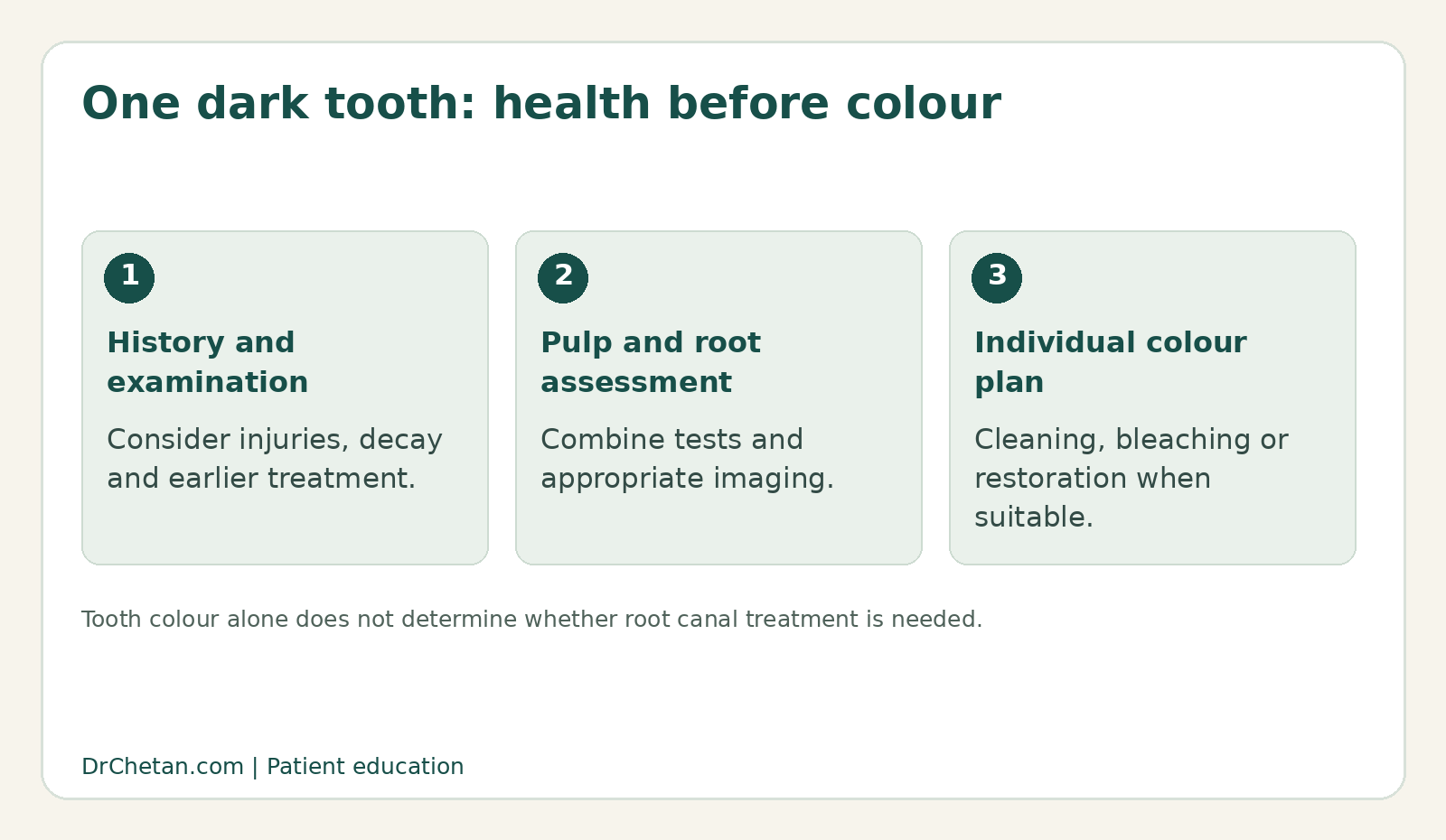
After trauma, an absent response to a sensibility test does not by itself prove that the pulp has died. The dentist combines the history, repeated findings when needed and imaging. Colour alone should not decide an irreversible treatment.
Will root canal treatment fix the colour?
Root canal treatment addresses disease inside a tooth when indicated; it is not simply a whitening procedure. If the pulp is healthy, treating it unnecessarily to change colour is not the default choice. If pulp necrosis or infection is diagnosed, appropriate endodontic treatment may need to come before cosmetic improvement.
A previously root-treated dark tooth needs assessment too. Its appearance alone does not tell you whether the old treatment is satisfactory. Ask whether there is disease to address or primarily an aesthetic problem.
What can be done about the appearance?
Cleaning or external whitening: cleaning can remove suitable surface stains. Dentist-supervised bleaching may lighten natural tooth structure in selected cases. Fillings, veneers and crowns do not whiten in the same way, so colour differences can remain.
Internal bleaching: selected teeth that have had appropriate root canal treatment may be lightened from inside. The dentist assesses the root filling, tooth structure and protective sealing before proceeding. The material and access require professional management; this is not a home procedure. Discuss the possibility of relapse and uncommon complications such as cervical root resorption.
Bonding, a veneer or a crown: these may mask colour or restore damage when suitable. They differ in how much tooth preparation is needed and how much maintenance they require. A crown is not automatically necessary for every dark or root-treated front tooth. Consider the least invasive option that meets health, strength and appearance needs.
How many visits will it take, and will the colour match?
Assessment, any disease treatment, bleaching and restoration may require separate stages. The shade can change during treatment, and a perfect permanent match cannot be guaranteed. Ask when the dentist will reassess the colour, when a final restoration would be placed and what future maintenance may involve.
A dark baby tooth after injury needs a child’s own assessment and follow-up. Do not apply an adult whitening or root canal plan to it. The presence of infection and other findings guide care.
Frequently asked questions
Does grey always mean the nerve is dead?
No. Tests and examination are needed; colour alone is insufficient.
Can whitening toothpaste solve an internal stain?
It mainly addresses surface staining and is unlikely to correct every internal colour change.
Can a dentist promise a one-visit match?
No reliable promise applies to every case. Ask about the likely stages, limitations and alternatives.
References and further reading
- European Society of Endodontology: Traumatized permanent teeth
- Prevention and management of tooth discolouration of endodontic origin, 2026 review
- ADA: Whitening and internal bleaching
- Leeds Teaching Hospitals: Tooth whitening
- IADT: Dental trauma guidelines
Sources checked 2 November 2026. This is general patient education; an examination and an individual treatment plan may be needed.

Leave a Reply