
Some cracked molars can be kept, while others cannot be restored predictably. The decision depends on the type and extent of the damage, the condition of the pulp and supporting tissues, and how much sound tooth remains. A crown or root canal is not an automatic answer for every crack.
What does “cracked tooth” actually mean?
A fine enamel line, a broken chewing cusp and a tooth divided into separate segments are different problems. A dentist first needs to establish which situation applies. A photograph of a line cannot show the full depth of a fracture or whether the tooth can be restored.
Craze lines are superficial enamel changes and often need no treatment beyond assessment. A fractured cusp may be repairable with a filling or a restoration that protects the weakened chewing surface. A deeper crack, split tooth or root fracture can have a more uncertain outlook. A fully split tooth generally cannot be preserved intact.
What questions will I be asked?
Expect questions about a hard bite or injury, previous large fillings, clenching or grinding, and when pain occurs. Mention temperature sensitivity, pain on chewing or releasing pressure, spontaneous pain, swelling and any recent changes. The dentist also needs your medical and medicine history before planning care.
What will the examination involve?
The tooth may be examined with light and magnification. The dentist can check individual cusps with a controlled bite test, assess the gum around the tooth and test its response to cold or other stimuli. An old restoration sometimes has to be removed to inspect the underlying tooth, after the implications are discussed.
X-rays help evaluate roots, bone and other causes of pain, but do not reveal every crack. More detailed imaging may be useful in selected cases. The team should explain what remains uncertain rather than present an invisible crack as conclusively mapped by a scan.
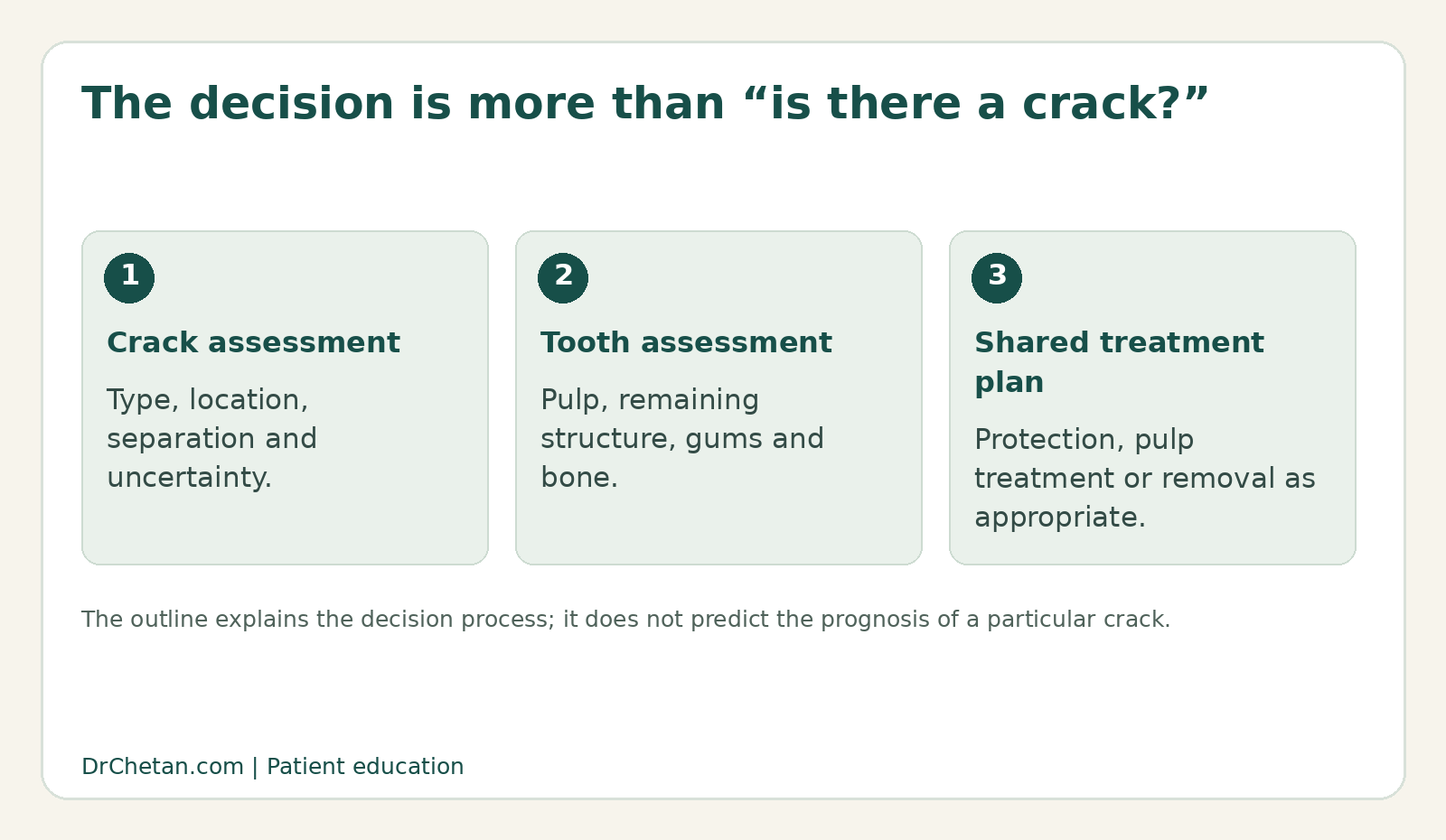
How does the dentist decide on treatment?
- Extent: where the fracture runs and whether the tooth has separated.
- Pulp condition: whether the living tissue is healthy, inflamed or infected.
- Restorability: whether enough sound tooth and a suitable margin remain for a durable restoration.
- Support and loading: gum and bone health, biting forces and other teeth.
- Your priorities: likely benefit, uncertainty, visits, costs and alternatives.
The discussion may change after closer inspection. Ask what the dentist knows now and what findings would lead them to recommend a different plan.
What might the treatment options be?
A limited defect may be restored directly. A weakened back tooth may need cuspal coverage, such as an onlay or crown, to reduce movement and protect it. Root canal treatment may be appropriate when pulp disease is present and the tooth remains restorable. It treats the tissue inside the tooth; it does not weld the crack back together.
In a tooth with extensive separation, an unfavourable root fracture or insufficient sound structure, removal may be the more predictable choice. Occasionally a specialist can retain part of a multi-rooted tooth. Such options require case-specific assessment, not a general promise that every fractured tooth can be saved.
Will a crown make the crack heal?
No. A crack in tooth structure does not heal like a fractured bone. Protection may reduce further damage, but some cracks progress despite treatment. Ask about the expected outlook, warning symptoms and review arrangements, including the possibility that future treatment or extraction could still be needed.
What happens during and after the appointments?
Your dentist can discuss local anaesthetic and comfort measures. There may be an assessment visit, temporary protection, definitive restoration and follow-up; root canal treatment or laboratory work can add visits. Tell the team if pain persists or worsens rather than assuming it must settle once a crown is fitted.
Until reviewed, avoid hard chewing on the tooth and do not test the crack yourself. Swelling, fever or severe pain warrants urgent dental advice. Breathing or swallowing difficulty with swelling requires emergency medical help.
Frequently asked questions
Can a crack exist without pain?
Yes. Symptoms alone do not show the extent of damage. A suspicious finding needs the appropriate examination.
Should I ask for a second opinion before extraction?
If the situation is not an emergency and you are uncertain, ask whether an endodontic or restorative opinion would clarify the options.
Is saving the tooth always the best choice?
It is worth considering a restorable natural tooth, but prognosis, treatment burden and your priorities matter. Trying to retain a tooth with a very poor outlook may not be the right plan.
References and further reading
- AAE: Cracked teeth
- AAE: Cracking the cracked tooth code
- AAE Colleagues for Excellence: Cracked teeth and vertical root fractures
- AAE: Saving your natural tooth
- MouthHealthy: Dental emergencies
Sources checked 2 November 2026. This is general patient education; an examination and an individual treatment plan may be needed.

Leave a Reply