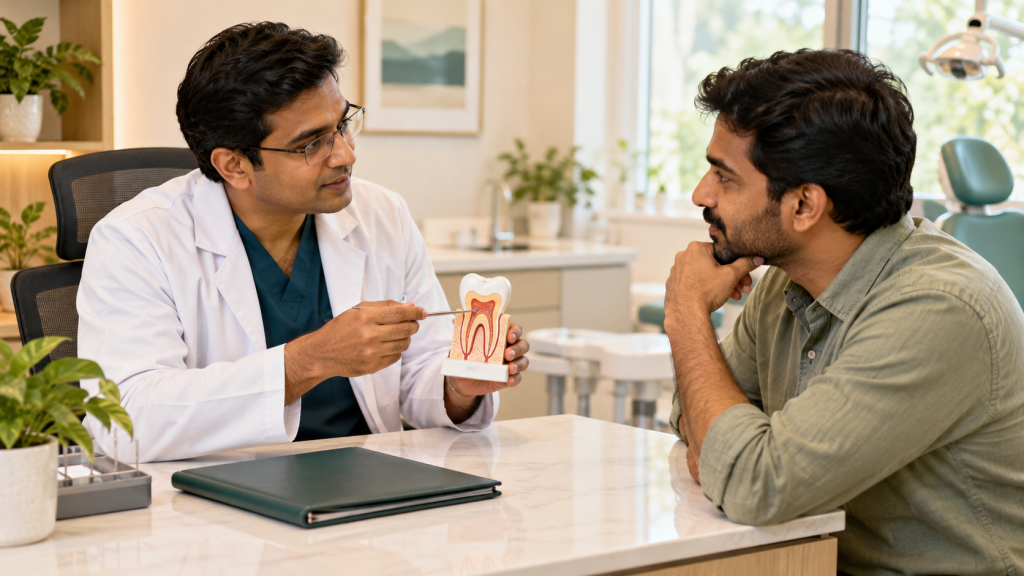
In selected adult teeth, a dentist may be able to preserve living pulp instead of removing all of it during root canal treatment. These approaches are called vital pulp therapy. They include pulp capping and partial or full pulpotomy. Suitability depends on the tooth, the diagnosis and what the dentist finds during treatment.
What is the pulp?
The pulp is soft tissue inside the tooth containing nerves, blood vessels and other cells. Deep decay or an injury can inflame or expose it. A tooth may still contain living tissue even when it is painful; symptoms alone cannot establish how much tissue can recover.
The aim of vital pulp therapy is to retain appropriate living tissue while managing the disease and sealing the tooth well. It is an established area of care with evolving evidence, not a guarantee that every painful adult tooth can avoid a root canal.
How do the procedures differ?
- Indirect pulp treatment: in suitable deep decay, a conservative removal strategy avoids exposing the pulp and the tooth is sealed with a restoration.
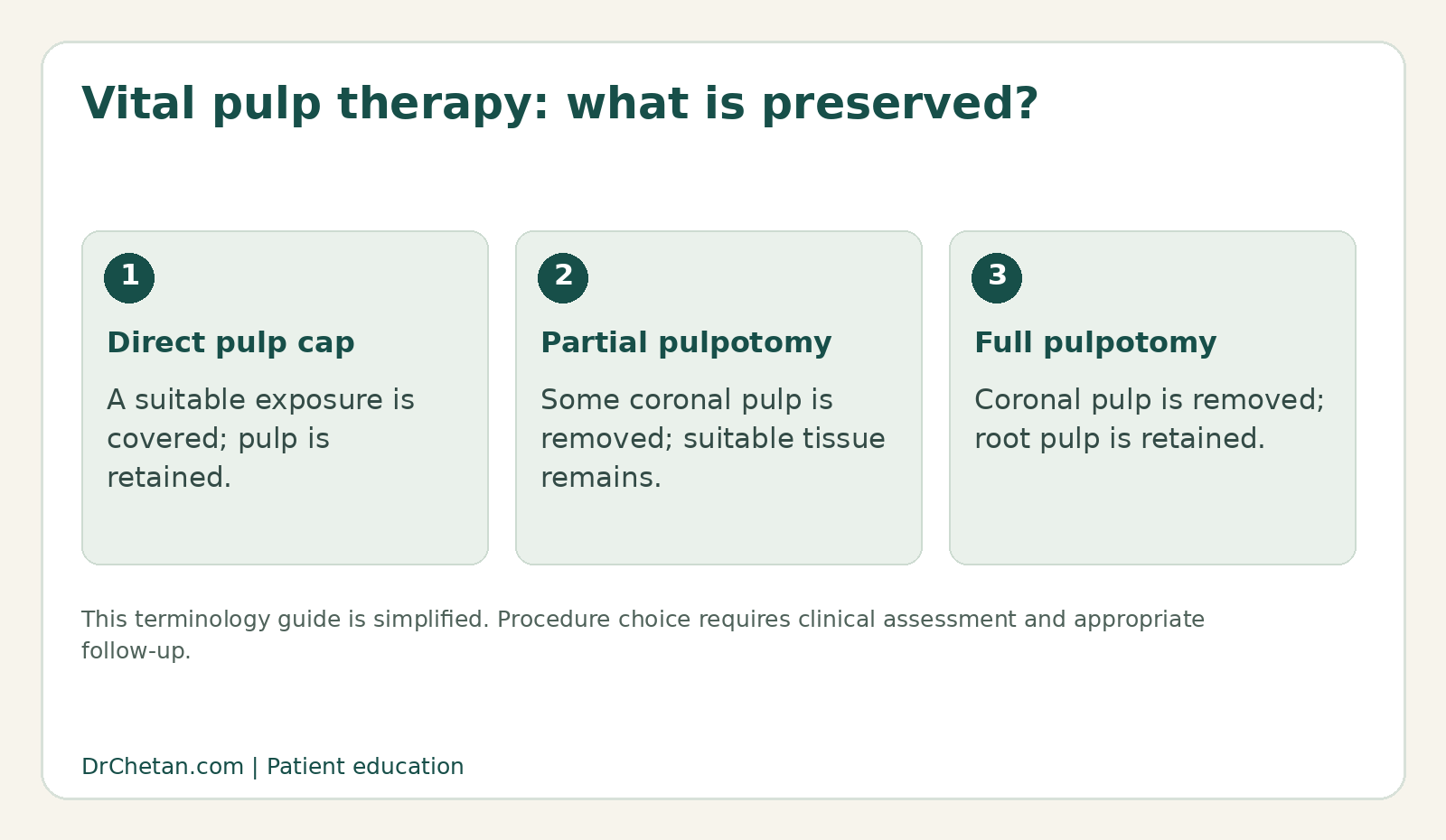
- Direct pulp capping: a suitable protective material is placed directly over an appropriate pulp exposure.
- Partial pulpotomy: a small portion of coronal pulp is removed while suitable tissue beneath is preserved.
- Full pulpotomy: the pulp in the crown portion is removed, aiming to preserve the pulp in the roots.
“Full pulpotomy” does not mean the same thing as complete root canal treatment. The tissue retained and the treatment objectives differ.
What will the dentist assess first?
The history includes pain triggers, pain without a trigger, previous treatment and any injury. Examination, pulp sensibility tests and selected radiographs help assess the tooth. The dentist also considers whether there is enough structure to restore it and whether a durable seal can be achieved.
Tests have limitations: a cold response is not a direct microscopic examination of the pulp. An initial plan may therefore change when decay is managed and the tissue can be assessed more directly. Ask what would lead the dentist to continue pulp-preserving treatment, change to root canal treatment or recommend another option.
Can an adult tooth with severe pain have a pulpotomy?
Current guidance allows consideration of pulpotomy in selected mature permanent teeth, including some with symptoms traditionally labelled irreversible pulpitis. This does not make it the correct treatment for every tooth with those symptoms. Case selection, tissue findings, equipment, training, restoration and follow-up all matter.
A necrotic pulp, an unrestorable tooth or an unfavourable fracture creates a different decision. Your dentist may refer you to an endodontist if the diagnosis or treatment is outside their usual scope. Recommendations should acknowledge uncertainty, especially about long-term outcomes in particular situations.
What happens during the appointment?
Local anaesthetic is used as appropriate. The dentist isolates the tooth, commonly with a rubber dam, manages decay and contamination, and assesses the exposed tissue if present. A suitable biomaterial and a well-sealed restoration are important parts of care. This is not simply placing a sedative dressing into any deep cavity.
Ask whether the final restoration will be completed immediately or at another visit. A tooth that needs additional protection may need further restorative work even if its pulp is preserved.
What happens afterwards?
Follow the agreed review schedule even if the tooth feels comfortable. The team checks symptoms, clinical findings and radiographs when indicated. New spontaneous pain, swelling or persistent tenderness warrants an earlier call. If the treatment does not succeed, root canal treatment or another intervention may still be needed.
No single success percentage fits every procedure and patient. Ask which evidence is most relevant to your diagnosis and what follow-up would count as a good outcome.
Frequently asked questions
Is pulp capping only for children?
No. Vital pulp therapy can be considered in appropriately selected permanent teeth, including mature adult teeth.
Can a crown replace pulp treatment?
A crown protects or restores tooth structure; it does not itself treat every inflamed or infected pulp. Both the inside and the outside of the tooth need assessment.
Should I refuse a root canal and request pulpotomy?
Ask whether it is a reasonable option for your tooth and why. Treatment should follow an individual assessment, rather than a preference for a procedure name.
References and further reading
- AAE position statement: Vital pulp therapy
- EFCD–ESE–ORCA: Deep caries management clinical practice guideline, 2026
- AAPD: Guideline for use of vital pulp therapy in permanent teeth
- ADA: Restorative treatments for caries lesions guideline
Sources checked 2 November 2026. This is general patient education; an examination and an individual treatment plan may be needed.

Leave a Reply