You are home after having a tooth removed. Can you drink tea? Should you rinse your mouth? How much bleeding is too much?
Tooth extraction aftercare centres on protecting the blood clot, keeping the rest of your mouth clean and recognising symptoms that need help. This guide explains the first 24 hours and the days that follow.
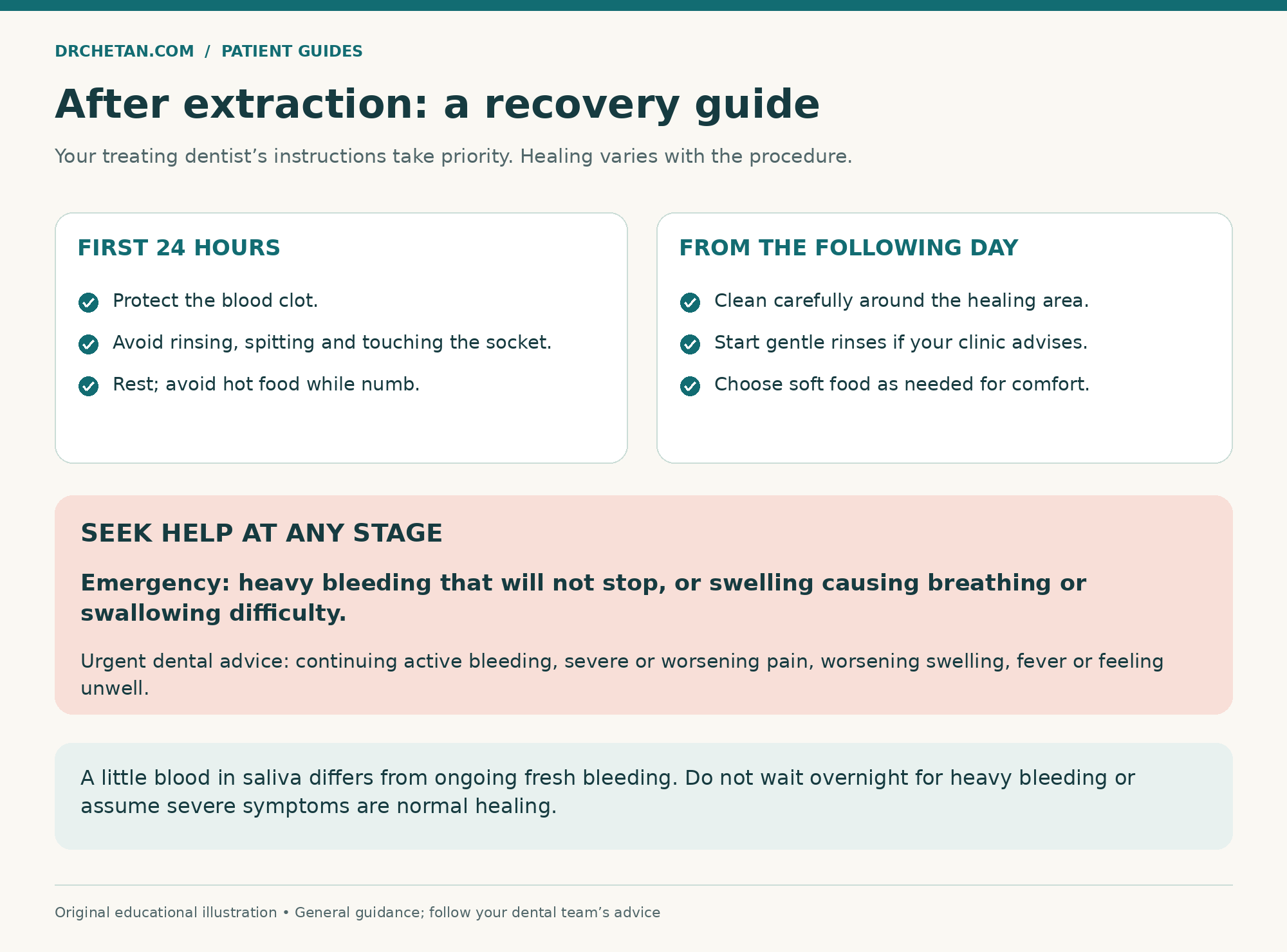
Get emergency medical help now if you have heavy mouth bleeding that will not stop, or swelling that makes it difficult to breathe or swallow. Rapidly spreading swelling with serious illness also needs urgent medical assessment. Do not wait until the next day. [1,2]
Contact your dentist promptly for continuing active bleeding, severe or increasing pain, worsening swelling, fever or feeling unwell after an extraction. A little blood mixed with saliva is different from a steady flow of fresh blood.
For routine recovery, follow the written instructions from the dentist who removed your tooth. They know how difficult the extraction was, which medicines you take and whether you had stitches, sedation or other treatment. The guide below explains the usual principles for an uncomplicated extraction; your own team’s advice may differ.
Why the blood clot matters
After a tooth is removed, a clot forms in the socket. It protects the area during early healing. Repeatedly poking the socket, forceful rinsing or spitting can disturb it. Your first priority is to leave the wound alone while following the clinic’s instructions for bleeding control and cleaning.
The first 24 hours
Use the gauze as your dentist directs
Keep the pad in place for the time your clinic recommends, applying steady pressure. Do not repeatedly lift it to inspect the socket. Remove it as instructed, and do not eat, drink or fall asleep with loose gauze in your mouth.
If fresh bleeding starts again, sit upright and place clean, folded gauze over the socket. Bite firmly and continuously for 30 minutes, unless your dentist has given a different plan. If active bleeding continues, contact the dental service promptly for advice; do not keep changing pads for hours or wait overnight. UCLH’s own protocol allows a second 30-minute period and advises contacting the service if bleeding persists after an hour. Heavy uncontrolled bleeding needs emergency help sooner.
If you take a blood thinner or have a bleeding disorder, follow your individual plan and seek advice early for continuing bleeding.
Protect the socket
During the first 24 hours, avoid rinsing, forceful spitting, touching the socket with a finger or tongue, and sucking through a straw. Do not probe the wound to check that a clot is present. Let saliva leave the mouth gently if necessary rather than repeatedly spitting.
Be careful while your mouth is numb
Local anaesthetic can last several hours, depending on what was used. Avoid hot food and drink, and take care not to bite your lip, cheek or tongue. Wait until it is safe to eat without injuring the numb tissues. If numbness lasts longer than your clinician told you to expect, contact the clinic.
Choose comfortable food and rest
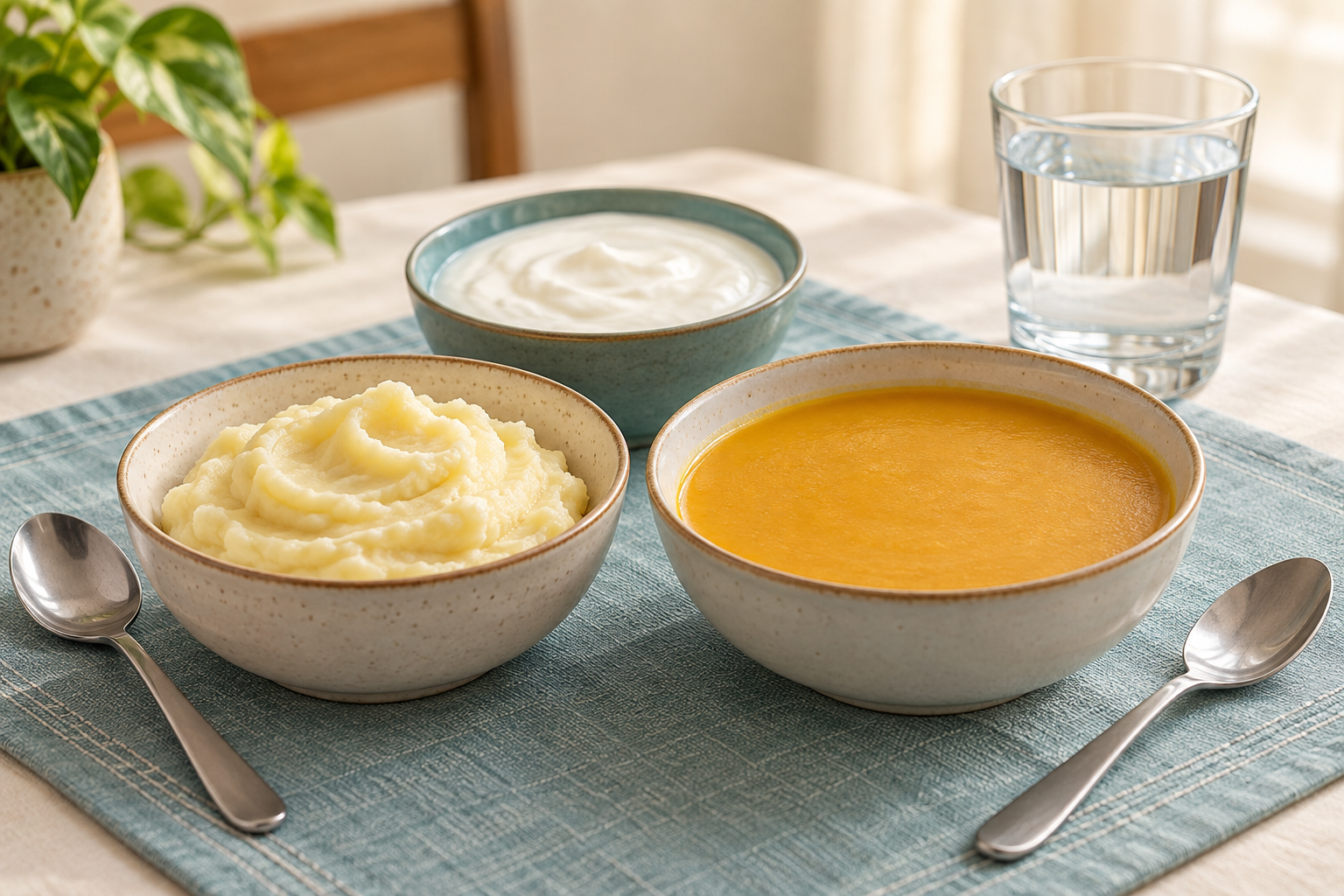
Soft foods such as plain yoghurt, mashed potato or smooth soup may be easier to manage. Let hot foods cool, sip water from a cup and avoid hard or crunchy foods that could injure the wound. Choose food you can manage without chewing on the extraction site. You do not need to eat only ice cream or ice-cold food.
Rest on the day of extraction and avoid strenuous exercise for at least 24 hours, or longer if your surgeon advises. If you had sedation or general anaesthesia, follow the separate instructions about supervision, driving and work. Feeling alert does not cancel those restrictions.
Cleaning from the following day
Do not abandon oral hygiene, but keep the brush away from the fresh wound. Clinics vary in their advice about cleaning the other teeth on the first day. From 24 hours, gentle toothbrushing can usually resume while taking care not to disturb the socket. Follow the instructions you were given.
After 24 hours, your clinic may recommend gentle warm salt-water rinses, especially after food. Use their recipe and frequency; the water should be comfortably warm, not hot. Gently bathe the area rather than swishing forcefully. Do not begin vigorous rinsing just because the clock has passed 24 hours. Use a prescribed mouthwash only as directed.
Pain relief and other medicines
Use the pain relief plan provided by your dental team. If you are choosing an over-the-counter medicine, ask a pharmacist whether it is suitable for your medical history and other medicines. Follow the label and avoid taking several products containing the same active ingredient.
Do not start aspirin as an extraction painkiller without advice because it can increase bleeding. This is different from prescribed aspirin or an anticoagulant: do not stop or alter a prescribed blood thinner on your own. Follow the plan agreed with your dentist and prescriber.
Antibiotics are not automatically needed after every extraction. If they were prescribed, take them as directed. If you develop a possible reaction such as a rash, get prompt medical advice before taking more. Breathing difficulty or swelling of the lips, tongue or throat after a medicine requires emergency help.
Do not put crushed tablets, aspirin, oils or home remedies into the socket. Ask the dental team to assess pain that is not controlled by the agreed plan.
Smoking, vaping and alcohol
Avoid smoking and vaping during recovery. Follow the minimum interval your surgeon gives you; recommendations differ with the procedure. Longer avoidance supports healing, and the end of a minimum interval does not mean smoking becomes risk-free. Ask your dental team for support if stopping is difficult.
Avoid alcohol on the day of the extraction and follow any longer restrictions related to your procedure, sedation or medicines. [4,5]
What recovery may feel like
Some soreness, mild oozing, swelling or bruising can follow an extraction, particularly a surgical one. The amount and duration vary. Swelling can increase during the first two or three days after surgery before settling, but severe symptoms, rapid deterioration or feeling unwell should not be dismissed as normal healing.
If your clinician recommends a cold pack for swelling, follow their instructions and wrap it to protect the skin. Do not apply ice directly or leave a pack on continuously.
You may still see a space where the tooth was removed while the area heals. Do not use its appearance alone to decide whether healing is normal, and do not scrape away tissue or material in the socket. Keep any planned follow-up appointment. Not everyone needs the same review date; ask whether your stitches dissolve or need removal.
Worsening pain and possible dry socket
Dry socket can cause increasing, sometimes severe pain a few days after extraction, often around days three to five. A bad taste or smell may also occur. These symptoms need dental assessment because infection and other problems can also cause pain. [8,9]
A dentist can examine and treat the socket. Do not try to pack or clean it with sharp objects at home, and do not assume you need antibiotics without an assessment.
When to seek help
| What you notice | What to do |
|---|---|
| Heavy bleeding that will not stop; breathing or swallowing difficulty with swelling | Get emergency medical help now. |
| Ongoing active bleeding despite firm pressure | Contact the treating dentist or emergency dental service promptly. Seek emergency care if heavy or uncontrolled. |
| Severe pain, pain getting worse after initial improvement, worsening swelling, fever or feeling unwell | Seek urgent dental advice. Do not wait for a routine review. |
| Mild discomfort that is improving, or a small amount of blood-tinged saliva | Continue your clinic’s aftercare plan; ask for advice if you are unsure or symptoms change. |
Keep the clinic’s daytime and out-of-hours contact details available before you leave your appointment. Use your local emergency medical service for life-threatening symptoms.
Frequently asked questions
Can I brush my teeth tonight?
Follow your clinic’s instructions for that first evening. Keep the brush away from the fresh socket; from the following day, cleaning usually resumes carefully. Do not brush directly into the wound.
Is blood in my saliva always an emergency?
No. A small amount can colour a lot of saliva. Fresh blood that keeps flowing, fills the mouth or does not settle with pressure is different and needs prompt help.
Must everyone return after 72 hours?
No. Review arrangements depend on the procedure and your needs. Attend the appointment your dentist recommends and seek help earlier for warning signs.
Can I drink tea or coffee?
Avoid hot drinks while numb and follow your dentist’s advice about when drinking can resume. When allowed, choose a comfortable temperature and sip from a cup. Do not use a straw during early recovery.
Do I have to eat ice cream after an extraction?
No. Choose soft food that is comfortable to eat; smooth yoghurt, mashed potato or cooled blended soup are other options. Avoid hard pieces, nuts and seeds that may lodge in the wound. Return towards your usual diet as comfort allows and your surgeon advises.
Does worsening pain mean I need antibiotics?
It means you need an assessment. Dry socket and infection can both cause pain, but their treatment differs. Dry socket may be treated by a dentist cleaning the socket and placing a dressing; antibiotics are not an automatic solution.
How long until the socket closes?
It can take a few weeks, and a surgical extraction may need longer recovery than a straightforward one. Do not use a fixed day or the appearance of a hole as your only test of healing. Ask your dentist about your expected recovery and contact them if symptoms worsen.
Before leaving the clinic: confirm how to use your medicines, how to contact the team after hours, and whether you need a follow-up visit or stitch removal.
Sources and further reading
- NHS: Emergency and urgent dental care
- NHS: Toothache — emergency swelling and swallowing advice
- UCLH: Dental extractions — post-operative instructions
- NHS: Wisdom tooth removal
- Whittington Health: What to do after a tooth extraction?
- Oral Health Foundation: What to do following an extraction
- NHS: Anticoagulant medicines — considerations
- Gloucestershire Hospitals: Advice for patients having a tooth removed
- Guy’s and St Thomas’: Dental surgery and recovery
- NHS Dental HealthCare: Minor oral surgery post-operative care instructions
Sources checked 30 October 2026. This is general patient information. Follow the individual instructions from the dentist or surgeon who treated you.

Leave a Reply