
Medical Problems in Dentistry: Article 96 of 215 · Joint disorders · Complete student guide
Medical Problems in Dentistry · Student guide
A patient may tolerate a dental procedure but struggle with the steps around it: entering the clinic, transferring, reclining or sitting still. These barriers are part of assessment. Osteoarthritis and limited mobility call for an individual functional plan, not assumptions based on age or a diagnosis in the medical history.
In this guide: Learning objectives · Start with this clinical case · Start with the patient’s account of function · Plan access and assistance before arrival · Agree on comfortable positioning and breaks · Connect each barrier with an adjustment · Review medicines and daily prevention · Review the whole visit, not only the restoration · Viva and self-check
Learning objectives
- Ask about access, transfers and comfortable positioning before treatment.
- Adapt appointment structure without forcing painful joints.
- Review medicine use and prevention in the context of daily function.
Start with this clinical case
Fictional teaching case. An older adult with knee and hand osteoarthritis needs several restorations. The previous visit ended early because reclining caused back discomfort and getting out of the chair was difficult. They now ask for a shorter visit and say they sometimes skip brushing because gripping the brush hurts.
Start with the patient’s account of function
Ask what was difficult last time and what helps at home. Clarify walking distance, stairs, seating, use of aids, assistance preferences and the ability to remain in one position. Symptoms and function can change; a person who walked in independently may still need an adjustment to the dental chair.
NIAMS describes osteoarthritis assessment as a combination of history, examination and selected investigations. The dental team should confirm an existing medical diagnosis and understand its practical effects, rather than diagnose every new joint complaint as osteoarthritis.[OA]
Address the patient directly and obtain permission before involving a companion. Needing physical assistance does not imply difficulty making dental decisions.
Plan access and assistance before arrival
Confirm that the route, doorway, waiting space and treatment area can accommodate the patient and their usual mobility aid. Ask what assistance they normally use. Arrange trained help and suitable equipment if a transfer is required; do not improvise a lifting technique or ask an untrained companion to perform an unsafe lift.
If the clinic cannot safely meet the need, arrange an appropriate service rather than attempt treatment through discomfort or risk. Explain the reason and provide a useful referral. The appointment plan should include the exit and return journey, not just arrival at the chair.
Agree on comfortable positioning and breaks
Let the patient describe a comfortable starting position. Explain chair movements before making them, adjust gradually and stop if symptoms occur. Consider suitable support and shorter treatment stages, checking that any adjustment still permits safe dental access and airway management. No single angle or cushion placement is correct for every patient.
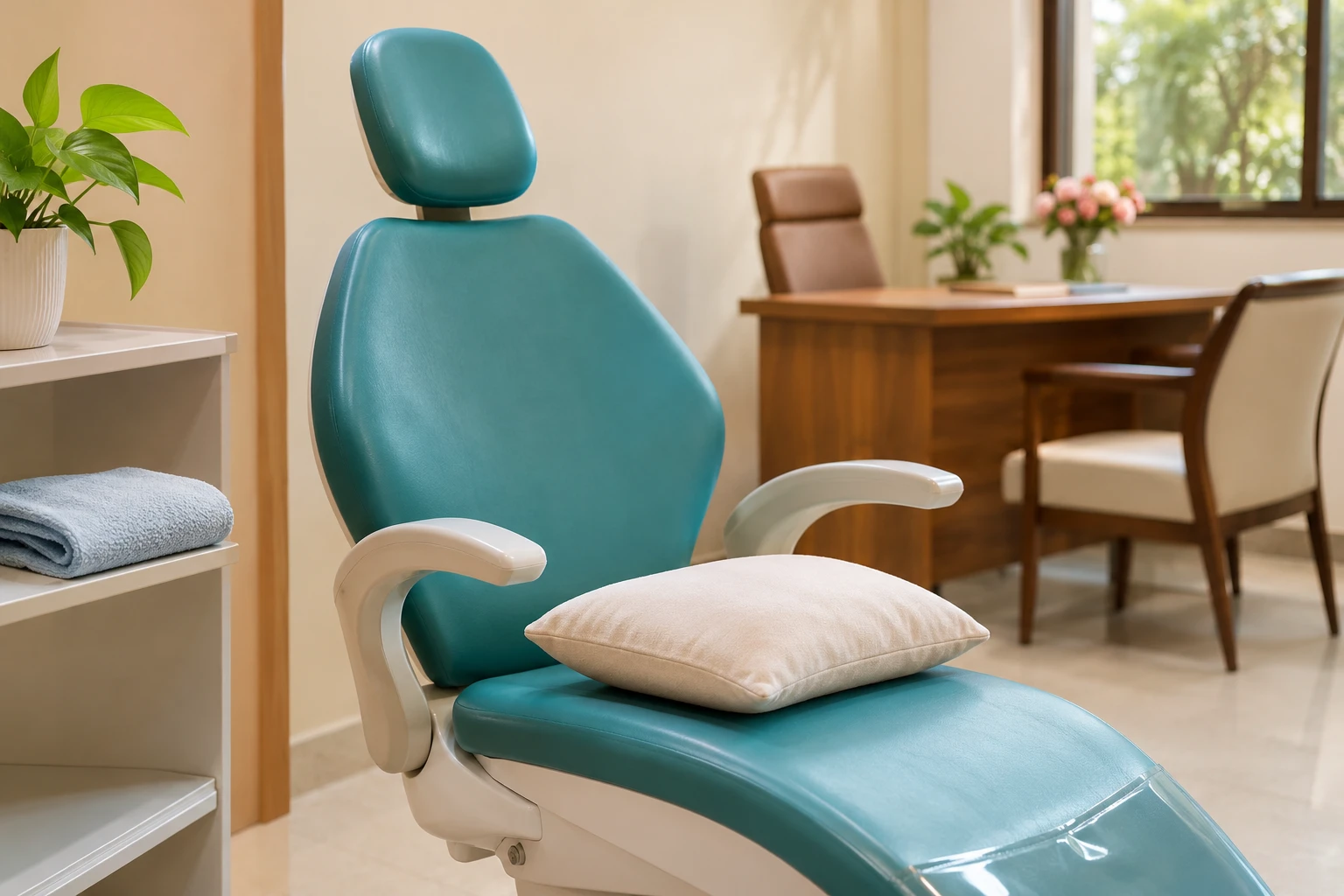
Record a practical review point during the procedure and an agreed pause signal. A patient should not have to tolerate increasing joint pain until the entire planned treatment is finished.
Connect each barrier with an adjustment
| Finding or question | Clinical implication | Student action |
|---|---|---|
| Pain when reclining | Standard positioning may not be tolerated | Agree on gradual adjustment and an appropriate care setting. |
| Difficulty remaining still for a long visit | Endurance affects treatment delivery | Stage work with planned opportunities to rest. |
| Painful grip during brushing | Instructions may be hard to carry out | Trial a larger grip, electric brush or another suitable aid. |
| Difficulty rising or transferring | The departure phase may need support | Arrange trained assistance and a safe plan beforehand. |
Review medicines and daily prevention
Ask about prescribed and over-the-counter analgesics, including combination products. Before adding a dental medicine, review duplication, interactions, kidney function and gastrointestinal or cardiovascular risks as relevant. Do not assume a familiar arthritis painkiller can be increased without assessment.
Inflammatory arthritis may involve medicines and risks different from osteoarthritis. Confirm what the person actually takes and why. Methotrexate, for example, introduces specific prescribing questions; it should not be inferred from the broad word “arthritis”.[MTX]
Arthritis UK suggests practical brushing adaptations including larger grips and electric brushes. Demonstrate an achievable option, ask the patient to try it and review the result. Include interdental cleaning and any chosen assistance in a realistic plan.[ARTHDENT]
Review the whole visit, not only the restoration
Ask whether the adjusted visit improved comfort, whether pain developed afterwards and whether returning to usual activities was manageable. Document the position and supports that helped, while checking them again next time. An adaptation is successful when it works for the patient and permits safe treatment.
For the case, agree on staged restorations, an access and transfer plan, comfortable chair movement and a brush trial. New severe joint symptoms, an acute functional decline or systemic illness needs medical assessment rather than being dismissed as expected ageing. Arrange follow-up for both the dental disease and the prevention barriers identified.
Viva and self-check
Does using a walking aid tell you the required transfer technique? No. Ask about the individual’s needs and arrange trained assistance and suitable equipment.
What makes an oral-hygiene instruction useful? It is achievable with the person’s hand function, preferences and available support, and its effect is reviewed.
Continue through the series
- Previous: Temporomandibular Disorders: Muscle Pain, Joint Pain and Differential Diagnosis
- Next: Prosthetic Joint Replacements: Dental Care and Antibiotic Prophylaxis Decisions
- Browse all 215 student guides by subject
More in Joint disorders: Rheumatoid Arthritis and Dentistry: TMJ, Function, Medicines and Shared Care · Temporomandibular Disorders: Muscle Pain, Joint Pain and Differential Diagnosis · Prosthetic Joint Replacements: Dental Care and Antibiotic Prophylaxis Decisions · Inflammatory Arthritis and Biologic Treatment: Dental Infection and Procedure Planning
Continue learning
- Structured medical history and examination
- Medical liaison and referral for complex dental patients
- Informed consent in an Indian dental practice
References and scope
Sources checked on 26 November 2026. This is an original student teaching guide. International clinical recommendations are identified by their issuing organisation. Emergency contact information is specific to India. Use current local protocols, appropriate supervision and an individual clinical assessment.
- NIAMS: Osteoarthritis—Diagnosis and Treatment
- NHS Specialist Pharmacy Service: Managing Interactions With Methotrexate
- Arthritis UK: Mouth and Teeth Health With Arthritis
Images are AI-generated educational illustrations of fictional people or equipment, not clinical records or diagnostic photographs.

Leave a Reply