
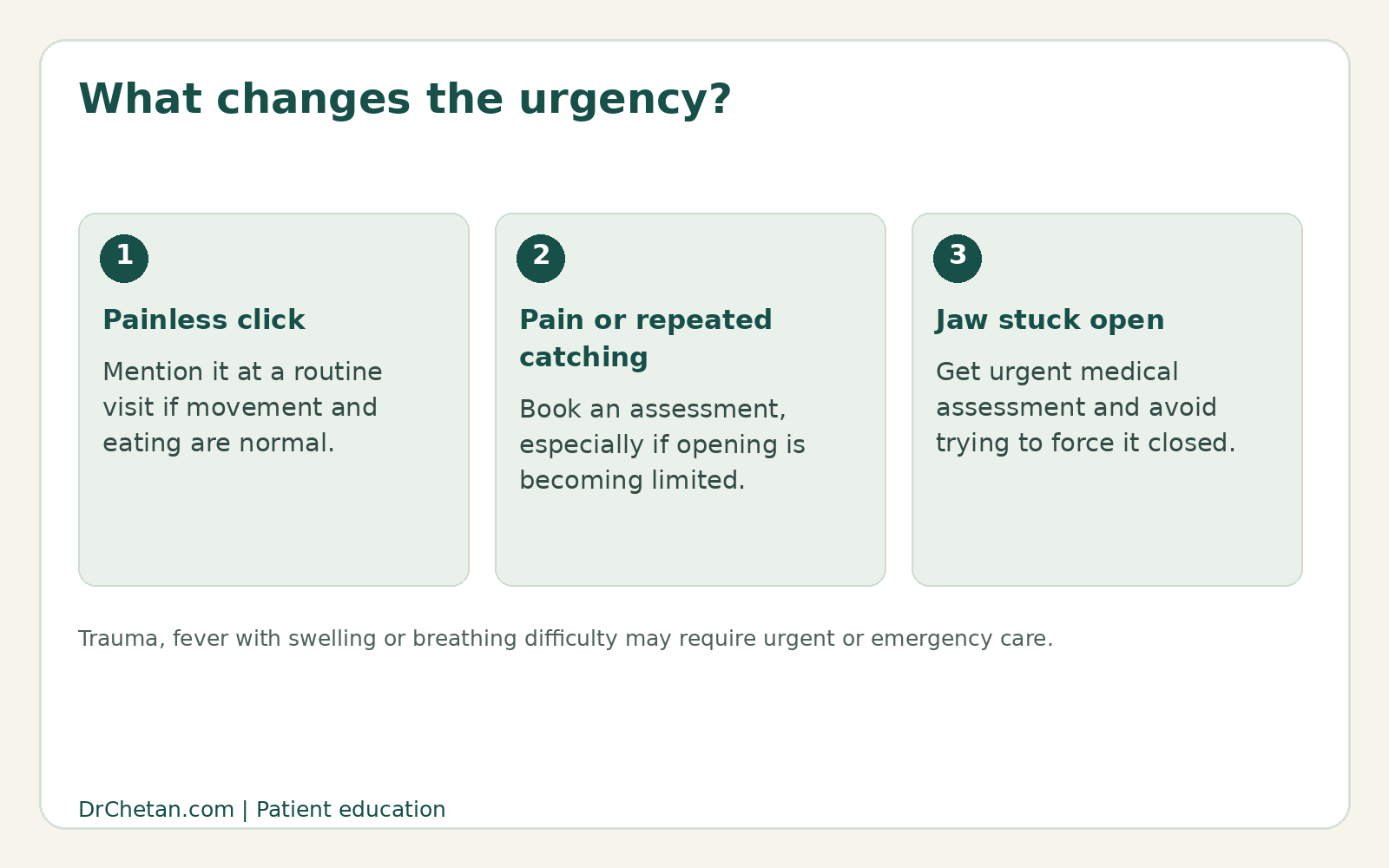
A jaw click without pain or difficulty moving the jaw is common and often needs no treatment. A click that comes with pain, repeated catching or a change in how far you can open deserves an assessment. A jaw stuck open and unable to close needs urgent care.
Start with what the jaw is doing
The jaw joint sits just in front of each ear. A click can happen as structures in the joint move during opening or closing. The sound alone cannot tell you whether the joint is damaged or which treatment would help. Notice whether you can eat, talk and open normally. A brief catch that releases differs from a jaw that stays locked.
Write down when the problem started, what you were doing at the time and whether it happens on one or both sides. Tell your dentist about injury, a change in the bite, headaches or pain spreading around the ear. Jaw pain can come from the joint, chewing muscles, teeth or other nearby structures.
Decide how quickly to get help
If a painless click is occasional and normal movement is unchanged, mention it at your next routine check. Arrange a dental or medical assessment sooner for pain, repeated locking, difficulty chewing or a gradual reduction in opening. If your jaw stays stuck shut or you cannot eat or drink adequately, seek urgent advice.
Seek urgent medical assessment if you cannot close a jaw that is stuck open, particularly after injury. Do not try to push it back. Fever with facial swelling or rapidly worsening difficulty opening can also need urgent assessment. Difficulty breathing or swallowing with swelling is an emergency.
What the examination can tell you
The clinician may check how the jaw moves, measure opening and gently feel the chewing muscles and joints. They may also examine the teeth and bite to look for other sources of pain. Imaging may be considered when the findings would change the plan, for example after trauma or if restricted movement persists.
Tell the dentist which movement brings on your usual symptoms. They may watch the path of the jaw, ask you to open and close gently, and check whether pressure over a joint or muscle reproduces the pain you recognise. An isolated click, a painful muscle and a tooth that hurts when you bite can call for different next steps. Ask what the examination suggests and what would make a scan or a referral useful.
Start with approaches you can change
For many uncomplicated painful jaw problems, initial care may include temporary softer foods, avoiding wide opening and reducing gum chewing or clenching. A clinician can advise on exercises, pain relief or physiotherapy when appropriate. Ask for an explanation and a second opinion before irreversible treatment aimed solely at changing the bite to treat joint symptoms.
Frequently asked questions
Does a painless click mean arthritis?
A click alone does not diagnose arthritis. Pain, stiffness, change in movement and examination findings are more informative.
Can I try to unlock it myself?
Avoid forcing the jaw. Get urgent assessment if it stays stuck open or if you cannot eat or drink adequately.
Does everyone need a scan?
No. The clinician decides whether imaging would answer a question that matters to your care.
References and further reading
- NIDCR: temporomandibular disorders and treatment
- NHS: temporomandibular disorder and urgent symptoms
Sources checked 3 November 2026. General patient education. Discuss your individual care with your clinical team. Featured image is an AI-created illustration.

Leave a Reply