
Medical Problems in Dentistry: Article 52 of 215 · Disorders of haemostasis · Complete student guide
Medical Problems in Dentistry · Student guide
Apixaban, dabigatran, aspirin and clopidogrel are not interchangeable “blood thinners”. Their targets, timing and management differ. Identify the exact medicine and indication before choosing the dental pathway.
In this guide: Learning objectives · Know which group you are assessing · Reconcile the actual schedule · Assess the procedure before discussing interruption · The SDCEP DOAC framework · Antiplatelet drugs need their own pathway · Haemostasis and discharge · Three original cases · Viva and MCQ
Learning objectives
- Distinguish anticoagulants from antiplatelet drugs.
- Explain why a normal INR does not exclude a DOAC effect.
- Build a procedure-specific plan, including medication timing where appropriate, haemostasis and aftercare.
Know which group you are assessing
| Group | Examples | Key teaching point |
|---|---|---|
| Direct thrombin inhibitor | Dabigatran | An anticoagulant; renal function can affect exposure |
| Direct factor Xa inhibitors | Apixaban, rivaroxaban, edoxaban | Anticoagulants with drug- and indication-specific schedules |
| Antiplatelet medicines | Aspirin, clopidogrel, prasugrel, ticagrelor | Reduce platelet-mediated clotting; INR is not their monitoring test |
| Combined regimens | Anticoagulant plus antiplatelet, or dual antiplatelets | Do not apply a single-drug pathway without assessing the combination |
INR is calibrated for vitamin K antagonist management, not as a quantitative measure of the effect of DOACs. A laboratory result of 1.0 therefore cannot be used to certify that apixaban has “worn off”. Routine INR-based monitoring is not the DOAC pathway.[1]
Reconcile the actual schedule
Ask the patient to bring the prescription or medicine pack. Record indication, strength, frequency, usual dose times and the last dose taken. Some indications use different schedules from others, including an initial higher-dose phase after acute venous thromboembolism. Do not infer once-daily or twice-daily use from the name alone.
Review kidney and liver impairment, recent acute illness, other medicines, previous bleeding and any recent thrombosis or cardiac intervention. A patient awaiting cardioversion or taking combined antithrombotics may need a particularly careful coordinated plan.
Assess the procedure before discussing interruption
Ask whether bleeding is expected and, if so, how difficult its control could be. Wound size, multiple adjacent sites, flap surgery, local inflammation and access matter. Also consider the operator, available haemostatic materials, appointment time and access to emergency care.
“Dental work” is too broad for a useful medical request. Describe the actual procedure and whether it can be staged. Do not transfer a major-surgery interruption schedule automatically to a small dental intervention.
The SDCEP DOAC framework
For dental procedures with low risk of bleeding complications, SDCEP recommends continuing the DOAC. For higher-risk bleeding procedures, it differentiates missing the morning apixaban or dabigatran dose from delaying a morning rivaroxaban or edoxaban dose. These are conditional recommendations based on very low-certainty evidence, not a reason to invent a routine multi-day stop.
The full higher-risk pathway also accounts for an evening once-daily schedule and gives restart instructions tied to secure haemostasis. For a planned change, the clinician must specify the exact last, omitted or delayed dose and restart plan. Students should use the linked current guidance with their supervisor; unresolved patient or procedural concerns require prescriber advice.[1][2]
This guide deliberately does not provide a patient self-interruption calendar. A timing instruction without a restart plan, or without knowing the actual drug schedule, leaves an avoidable gap in care. Do not stop treatment independently for a patient with a recent thrombosis, acute-dose regimen or an uninterrupted-anticoagulation requirement.
Antiplatelet drugs need their own pathway
SDCEP advises continuing single or dual antiplatelet treatment for dental care, using local haemostatic measures. Allow enough time because bleeding can be prolonged; consider limiting or staging the area and use packing or suturing where indicated. A coronary stent makes uncoordinated interruption especially concerning. Do not ask the patient to stop aspirin or clopidogrel simply to make an extraction “less bloody”.[3]
Combination anticoagulant–antiplatelet treatment needs a separate assessment. If the dental operator has a concern, clarify it with the prescribing team rather than removing one medicine from the regimen by default.
Haemostasis and discharge
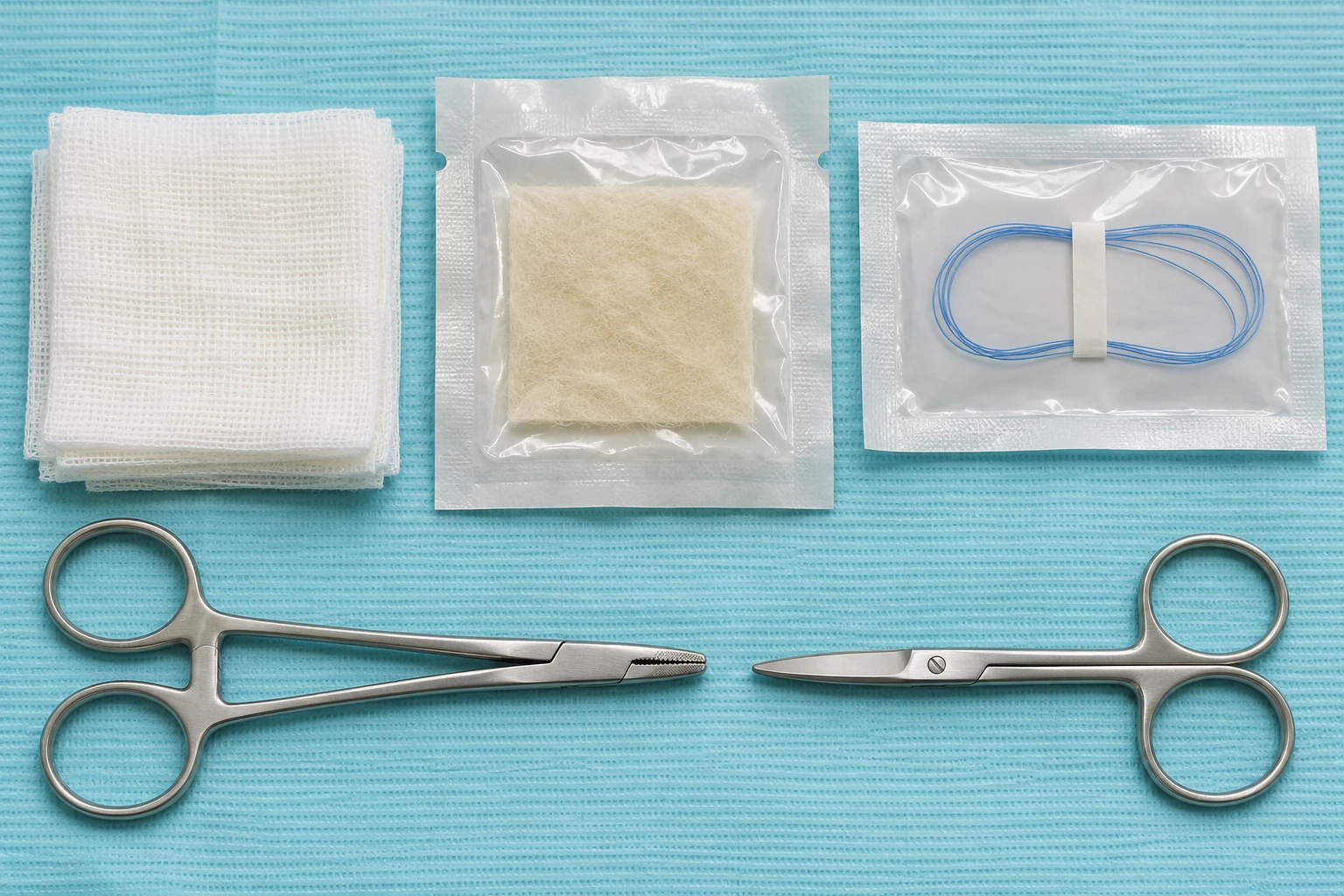
Plan atraumatic technique, direct pressure and appropriate local packing or suturing. Confirm haemostasis before the patient leaves. Record what was used, how the socket or wound was assessed, and the contact route for recurrent bleeding. Severe or uncontrolled bleeding needs escalation; the next step is not an unsupervised long interruption of all medicines.
Review prescribed analgesics, antibiotics and non-prescribed products for interactions and additional bleeding risk. The general ADA discussion reinforces balancing thrombosis against local bleeding; it should not be read as a blanket permission for every drug combination or operation.[4][5]
Three original cases
Case A: A patient taking apixaban brings INR 1.1 and asks for extensive surgery. INR does not resolve the problem. Clarify dose schedule, renal status, procedure and haemostatic plan before deciding medication timing.
Case B: A patient taking aspirin and clopidogrel after a coronary stent is told by a friend to stop both for a week. Explain why the prescribing plan matters and coordinate any concern with cardiology. Do not adopt the friend’s schedule.
Case C: A once-daily DOAC is actually taken in the evening. A generic instruction to “miss the morning tablet” is meaningless for that person. Reconcile the real schedule and follow the appropriate pathway.
Viva and MCQ
Does a normal platelet count rule out antiplatelet effect? No. Quantity and function are different.
What must accompany a timing change? A documented, patient-understood restart plan, haemostasis check and access to help.
MCQ: Before a dose decision, the most useful missing information is A, exact drug, indication, schedule and procedure; B, tablet colour only; C, INR alone. Answer: A.
Continue through the series
- Previous: Warfarin and Dental Procedures: Procedure Risk, INR and Local Haemostasis
- Next: Haemophilia and von Willebrand Disease: Haematology Liaison Before Dental Care
- Browse all 215 student guides by subject
More in Disorders of haemostasis: Dental Bleeding History and Coagulation Tests: Platelets, PT/INR and aPTT · Warfarin and Dental Procedures: Procedure Risk, INR and Local Haemostasis · Haemophilia and von Willebrand Disease: Haematology Liaison Before Dental Care · Post-Extraction Bleeding: Local Measures, Reassessment and Escalation
Continue learning
- taking a structured medical history
- assessment and medical liaison for complex patients
- medical emergency readiness in a dental clinic
References and scope
Sources checked on 25 November 2026. This is an original student teaching guide. International clinical guidance is identified by its issuing organisation; it is not presented as an Indian statutory rule. Apply the treating team’s current protocol and supervision to individual patients.
- SDCEP 2022: Direct Oral Anticoagulants, Recommendations
- SDCEP 2022: DOAC Procedures with Higher Bleeding Risk
- SDCEP 2022: Antiplatelet Drugs
- SDCEP: Local Haemostatic Measures
- American Dental Association: Anticoagulants, Antiplatelets and Dental Procedures
Images are AI-generated educational illustrations of fictional people or equipment, not clinical records or diagnostic photographs.

Leave a Reply