You finish brushing and reach for mouthwash. It feels like the natural last step. But is it necessary, and is that the right time to use it?
Mouthwash can help with a particular need, but it does not replace brushing, cleaning between teeth or treatment of a dental problem. Start with what you want the rinse to do, rather than its colour or how strongly it tingles. [1]
Does everyone need mouthwash?
No single rinse is essential for every adult. Someone with a comfortable mouth and an effective cleaning routine may not need another daily product. A person at increased risk of decay or with a specific gum-care need may benefit from a rinse chosen with their dental team. [1][2]
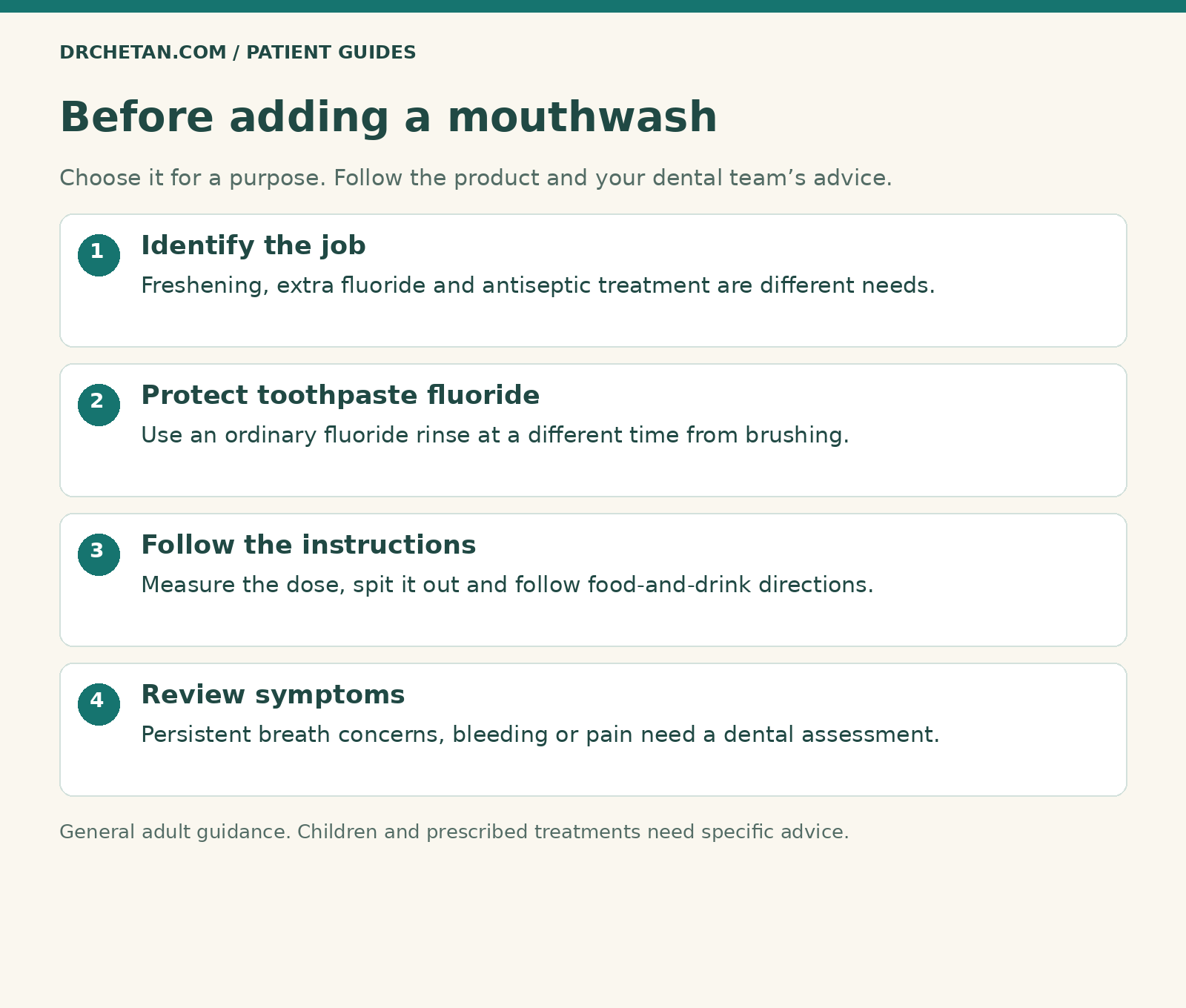
Before buying, ask: “What problem am I trying to address?” A fresh taste, extra fluoride and a short course of antiseptic treatment are different aims. Keeping that distinction clear makes the label easier to understand.
Different types do different jobs
| Type | Potential role | Important limit |
|---|---|---|
| Cosmetic rinse | Temporary breath freshening | A pleasant taste does not establish that a cause has been treated. |
| Fluoride rinse | Additional decay prevention when appropriate | Check fluoride content and instructions; it does not repair a hole. |
| Antiplaque or antigingivitis rinse | Support for plaque and gum-inflammation control | Cleaning and any needed professional treatment still matter. |
| Chlorhexidine rinse | A targeted antiseptic course when advised | Usually short term, with specific timing and possible side effects. |
Therapeutic rinses contain active ingredients for particular purposes; a product may combine functions. Read the active ingredients and indication. Words such as “total care” do not tell you whether it contains fluoride or whether it suits you. [1][2]
When should you use it?
For an ordinary fluoride mouthwash, choose a different time from brushing, such as after lunch. Immediately rinsing after brushing washes away the more concentrated fluoride left by toothpaste. Spit out excess toothpaste instead. After a fluoride rinse, avoid eating or drinking for 30 minutes. [3]
An example routine is brushing in the morning, a recommended fluoride rinse after lunch, and brushing with interdental cleaning in the evening. The rinse is included only if it serves a useful purpose. A prescribed medicine may need a different plan.
Do not assume that “wait a few minutes” applies to every bottle. Ingredient interactions and directions differ. If a product instruction seems to conflict with your dentist’s plan, ask them or a pharmacist to clarify it.
Why chlorhexidine needs a clear plan
Chlorhexidine is usually for short-term treatment. Confirm why it was recommended, the dose, how long to rinse, the number of daily uses and when to stop. Follow the actual product or prescription rather than copying a dose from another bottle. [4]
Toothpaste can interfere with chlorhexidine. NHS guidance favours using it at a different time from brushing; ask for specific instructions if that is impractical. Do not wash away toothpaste every day simply to fit an optional rinse into the routine. [4]
Possible effects include tooth staining, taste changes, dryness and irritation. Seek advice if these bother you; stop and contact a clinician for a sore or irritated mouth. Sudden lip, tongue or throat swelling or difficulty breathing needs emergency medical help. [5]
How to use a rinse safely
- Check that the product is intended for your age and purpose.
- Read the dose and use the supplied measuring device where provided.
- Rinse for the instructed time, then spit it out. Do not swallow it.
- Follow directions about food, drinks and any rinsing afterwards.
- Keep it out of children’s reach and review whether it is helping the intended problem.
Do not dilute a product unless its instructions tell you to. A stronger concentration or a longer rinse is not automatically better. Burning is not a reliable measure of benefit. Persistent discomfort deserves advice, not an attempt to tolerate it.
Children, dry mouth and recent dental treatment
Children: the ADA advises no mouthrinse under age six unless a dentist directs it, because of swallowing risk. Older children still need an age-appropriate product and the ability to spit reliably. Follow the label and the child’s dentist; an age threshold is not an instruction to start using mouthwash. [1]
Dry mouth: ask about an alcohol-free product and the cause of the dryness. Water, saliva support and a review of contributing medicines may be useful. Do not stop prescribed medication yourself. Not every freshening rinse is comfortable for a dry mouth. [6]
After surgery: follow your surgeon’s instructions. A general oral-care routine is not a reason to rinse immediately after an extraction. Some procedures require you to protect the clot and delay rinsing. [7]
When a dental check is more useful than another bottle
Recurring bleeding, persistent bad breath, pain or swelling can need assessment. A rinse cannot remove hardened tartar or correct a broken tooth. If bad breath continues after a few weeks of improved care, see a dentist; book sooner for toothache, painful or bleeding gums, loose adult teeth or denture problems. [8]
Tell your dentist which products you already use. A photograph of the ingredient list is more helpful than remembering that the bottle was blue. Ask what to monitor and when to review the plan.
Questions patients often ask
Can I replace flossing with mouthwash?
No. Rinsing is not the same as physically cleaning the tooth surfaces between teeth. Keep an appropriate interdental routine. [1]
Is alcohol-free always the most effective?
Alcohol content alone does not identify the treatment benefit. Match the active ingredient and indication to your needs. Alcohol-free products may be preferable for dryness or when alcohol must be avoided. [1][6]
Does a stronger sting mean cleaner teeth?
No. Choose by purpose and tolerability, not sensation. If a product causes continuing irritation, ask for advice. [5]
Should I keep using an antiseptic indefinitely?
Follow the intended course and review persistent symptoms. Extending chlorhexidine treatment yourself can create problems without addressing the cause. [4]
References and further reading
- American Dental Association: Mouthrinse
- Oral Health Foundation: Mouthwash
- NHS: How to keep your teeth clean
- NHS: How and when to use chlorhexidine
- NHS: Side effects of chlorhexidine
- NHS: Dry mouth
- UCLH: Dental extractions — post-operative instructions
- NHS: Bad breath
Sources checked 30 October 2026. This guide provides general patient information; your dental team can advise on your individual needs.
Leave a Reply