Archive under: Dental Instruments

During a dental procedure, many instruments are used in the cavity preparation. These hand instruments are of different design and they perform tooth-cutting and caries-removing procedures. They are used on different tooth surfaces and in different parts of the oral cavity.

Some of these dental excavation instruments are the enamel chisels, gingival margin trimmers, and dental excavators like the enamel hatchet and spoon excavators.

Enamel hatchets:
Enamel Hatchets are dental hand instruments that are designed to cleave tooth enamel along the margins of the enamel rods. They are used in preparation of the cavity walls and the accessible margins of the dental cavity preparation. They are recognized by their numbers.

Dental hatchets:
The dental hatchets are used for widening the entrance of the tooth cavity. After the carious dentine is removed, this dental hand instrument is used to slice away the thin carious enamel.

Spoon Excavators:
Spoon excavators are extensively used in the removal of the tooth debris and decayed dentin from the tooth cavities. Usually, the paired instruments are used for the purpose of excavation of the tooth. These are also identified with numbers.

Spoon excavators are further categorized by their sizes. They are small, medium, and large spoon excavators.
1. The small spoon excavator has an approximate diameter of 1 mm. This instrument is chiefly used in smaller tooth cavities and for the cleaning the enamel or dentine junction. As this is a fragile instrument, a low force is used while excavating to prevent it from damage.
2. The diameter of the medium spoon excavator is about 1.5 mm. This is used chiefly for removing soft caries from larger cavities. Mixed restorative material can be pushed in the cavity using the rounded surface of this excavator.
3. The large spoon excavator is about 2 mm in diameter. This hand dental instrument is used for tooth excavating and restoration procedures, and to remove excessive glass-ionomer material.

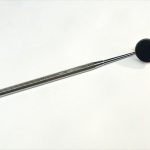
The various other instruments used for the tooth excavation procedures are the mixing pad and spatula, mouth mirror, explorer, pair of tweezers, and applier and carver. A special sharpening stone, the ‘Arkansas’ stone, is used for sharpening the spoon excavator, hatchet and the carver.

Different Type of Burnishers

May 11 | Posted in the category: Dental Instruments

Burnishers are dental hand instruments and are normally used at the end of dental restoration procedures or operations. They are used to emphasize grooves and to shave off surplus fins. Burnishers are also used to smooth off the rough margins after a dental restoration, polish the dental restoration, and to remove any scratches formed on the amalgam surface formed during the dental procedure. The working ends of the burnishers are angled, and the ends, either or both, are rounded and smooth. The ends can be single-ended or double-ended in structure.

The various types of burnishers based on the shape of their end parts are:

  • Flat plastic burnisher
  • Ball burnisher
  • Beavertail burnisher
  • Cone burnisher
  • T-ball burnisher
  • Rotary burnisher

Different types of burnishers have different specialized purposes, and are available in peculiar shapes, and sizes. For example, the rotary dental burnisher contains a shank portion that tapers down and connects to a fluted burnishing head. The rotary burnishing head are polished, rounded, and elongated, and has ridges on the surface. The T-ball burnisher has a T-shape at its one end, and one of the ends of the T-shape is shaped like a ball. The ball-end dental burnisher is usually used as a probe to find specific orodontal margins.

Burnishers are precision dental hand instruments and these delicate instruments need careful handling and maintenance to preserve their quality and promote longer life of the instrument. Dental burnishers are multipurpose precision hand instruments and are also used in the operative procedures of eye, ear, nose, and throat.

Dental Probes

May 08 | Posted in the category: Dental Instruments

The dental probe, also called the periodontal probe, comprises of a handle, a distal part or portion, and a measuring needle. The shape of a periodontal probe is a long and thin bodied instrument with blunted ends. A measuring needle is used to explore the gum pockets. The needle has at least one measure gradation. The instrument has a flexible end that can go around corners in tortuous blind pockets. With this, the dentist can examine the full depth of the periodontal pockets. A dental probe can also be used to find hole in the dental enamel. The measuring needle can find whether there is any tartar or other foreign bodies present in the pocket.

The dentist uses the dental probe to measure the periodontal sulcus’ depth. When a person has gingivitis, the periodontal probe shows higher depth because the gums are swollen and are enlarged due to the inflammation of the gum tissues. On probing, there is bleeding from the gums. When a person has periodontal disease, the periodontal gums give even higher readings, because along with the swelling of the gums, there is also a loss of surrounding bone material.

Bleeding on probing, also known as BOP, is a sure sign of an inflammation present, and indicates some pathology in the lining of the gingival sulcus. A periodontal chart, a sort of topographical mapping of the patient’s gum tissues, is created with the help of the periodontal probe and it can measure the extent of the disorder present in the tissues surrounding the teeth. This chart can also be used to note the progress made along the treatment. A probing with the help of the periodontal probe indicates the state of health of the periodontium.

Dental Drills

May 07 | Posted in the category: Dental Instruments

A dental drill, also called the dentist’s drill, is a portable high-speed precision drill. It is used to remove the decayed material from the teeth before the procedure of dental filling. In dentistry, the dental drill is also used for treating dental caries. A dental drill is capable of rotating at more than 400,000 rpm. Due to the shrill sound of the dental drill, it has become the major cause for dentophobia, the fear of dentistry.

In 1868, American dentist George F. Green innovated a pedal-powered drill that operated with the help of pneumatic bellows. In 1871, James B. Morrison innovated pedal-powered burr drill. Dr. Green patented the electric dental drill using the electromagnetic motor in the year 1871, which revolutionized dentistry. This was later modernized by replacing the electromagnetic motor with normal plug-in type electric-powered dental drill.

The dental drill usually uses small tungsten carbide or steel burs. The bur can also have a coating of diamond. The dental drill is carefully sterilized every time before any dental procedure. The dental drill is used to remove the decayed area of the tooth. Depending upon the affected area, the use of a dental drill, or an air abrasion device, or a laser ablation system can be used in the dental procedure.

Advanced robotic dental drills are being developed to assist the doctor and the patient to make the dental procedures more economical and less painful. In this procedure, a frame is used with very thin needles that are pierced in the gums to determine the location of the underlying bone. The findings are wirelessly transmitted to the personal computer. This data is combined with the CT scans, which then configures the guidelines for the specialized dental drilling procedure. The dentist then activates the drill to start drilling at precise spots that were predetermined by the computer.

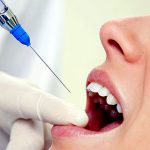
Dental anesthesia is the process of anesthetization for the purpose of operation on the dental, gingival, and its associated oral structures. The dental anesthesia procedure relieves the patient’s discomfort and pain during the dental treatment. Normally, the inferior alveolar nerve is anesthetized for dental anesthesia procedures. The usual site of injecting dental anesthesia is the mandibular foramen. This causes the blockage of the inferior dental nerve, causing the loss of sensation in the lower lip, chin, tongue and the teeth.

During the process of dental anesthetization, different anesthetic agents are used to block the inferior alveolar nerve’s sensory transmission to the central nervous system. Topical anesthetics like Eugenol, benzocaine are applied to the oral tissues with a sterile swab to relieve buccal surfaces’ pain. Nitrous oxide, the anti-anxiety agent, relaxes the patient during the dental procedures. Anti-anxiety agents are used for moderate sedation purpose. Lidocaine, xylocaine, septocaine or marcaine, or any other suitable anesthetic agent, depending on the procedural requirement, induces local anesthesia. Deeper sedation or general anesthesia under ketamine or fentanyl may be required in certain dental cases.

The dentist uses specialized dental syringe containing a breech-loading syringe that has an anesthetic solution packed in a hermetically sealed cartridge. The syringe tip is detachable from the syringe body. This dental syringe containing the anesthesia is inserted towards the root apex of the tooth until the bone is contacted. The dental carpule contains the anesthetic agent of xylocaine with epinephrine. The dental syringe may also contain an additional tool to supply water or air to remove debris while conducting the dental procedure. A 3-way dental syringe is used which can supply pressurized air, water, and a mist of water and air through separate channels to assist the dental procedure.

Dental Tweezers

May 05 | Posted in the category: Dental Instruments

Dental tweezers is a pair of tweezers. Dental tweezers are available in different designs, sizes, and shapes. The locking-type tweezers are used to firmly hold any object and lock it in position, leaving the dentist to do other procedures. For example, the locking-type tweezers is used to hold the end of sutures, tissues, or a cloth in a locked position over a long time.

The dental tweezers are available as:

  • The college serrated type with stainless steel body, angled beak, and serrated handles,
  • The college non-serrated type with stainless steel body and angled beak
  • The locking type
  • the plastic disposable type
  • Various other specialized types and sizes.

The beak of the tweezers is a delicate structure, and the tweezers should be handled with care. These beaks can distort easily if they are used carelessly or incorrectly.
The tweezers are sterilized carefully and are used during any oral or dental procedures to avoid contamination of any tissue or specimen while handling. The pair of tweezers, or the college tweezers as they are popularly known, is used to transfer an item from one place to another.

For example, it is used for holding and transferring the cotton wool pellets, cotton wool rolls, wedges and articulation paper from the tray to the oral cavity and back. For example, this hand dental instrument is used to apply the dentine conditioner with the help of cotton wool pellets. To stop the bleeding, the pair of tweezers is used with the cotton wool pellets, which is pressed on the wound till the bleeding is stopped, or to place medicated cotton wool inside the cavity.